


It is a chilly evening in late March 2026, and while the culinary world is buzzing about the upcoming Food & Wine Classic in Aspen, some traditions remain the ultimate comfort baseline. Cheese Fondue is more than just a dip; it is a communal ritual born in the 18th-century Swiss Alps as a pragmatic solution for using stale bread and aged cheese.
In 2026, we’ve moved past processed “nacho” sauces and returned to the complex, sharp elegance of Gruyère and Emmentaler. But achieving that silk-like consistency requires more than just heat—it requires a basic understanding of molecular gastronomy.
01. The Chemistry of the Emulsion
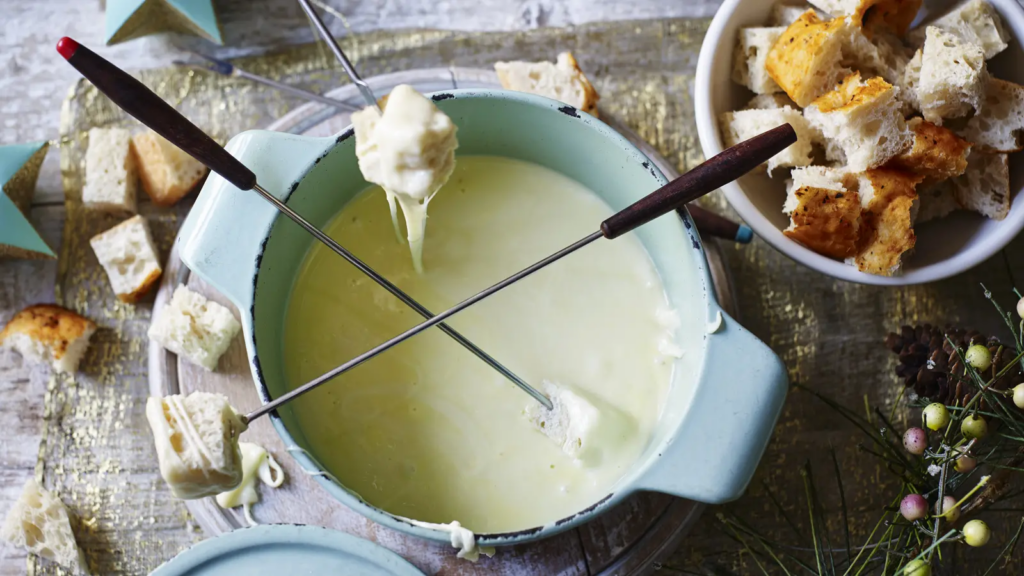
The biggest fear in fondue making is “breaking” the sauce, where the fat separates from the protein, leaving you with a rubbery clump in a pool of oil. To prevent this, we rely on emulsifiers and pH management.
According to the Science of Food: The Chemistry of Cheese Melting, cheese consists of a protein matrix (mostly casein) that holds fat and water together. When heated, these proteins want to tighten. We add Dry White Wine (Tartaric Acid) and Lemon Juice (Citric Acid) to lower the pH, which helps break down the calcium cross-links in the casein micelles.
The addition of Cornstarch acts as a stabilizer. It coats the fat droplets, preventing them from recombining. The ideal molecular stability can be represented by the balance of protein dispersion:
$$\text{Protein (Casein)} + \text{Acid (Citric/Tartaric)} + \text{Heat} \rightarrow \text{Smooth Emulsion}$$
02. The “Moitié-Moitié” Blend: Choosing Your Curds
While regional variations exist across Switzerland, the classic 2026 standard remains a 2:1 ratio of Gruyère to Emmentaler.
- Gruyère: Provides the backbone—nutty, salty, and high in moisture, making it an ideal melter.
- Emmentaler: Offers the mild, buttery sweetness that balances the sharp funk of the Gruyère.
- Kirsch: This cherry brandy isn’t just for flavor; the alcohol helps lower the boiling point of the cheese mixture, preventing the proteins from over-toughening.
03. Deep Dive: The “Religieuse” and Social Etiquette
In Swiss culture, fondue is a game of skill. As outlined by MySwitzerland’s guide to National Traditions, the person who loses their bread in the pot faces a “penalty”—traditionally buying a round of drinks or cleaning the kitchen.
Note: The most coveted part of the meal isn’t the dip itself, but the religieuse (the nun). This is the thin, toasted crust of cheese that forms at the very bottom of the pot. It is scraped off at the end of the meal and shared as a delicacy.
04. The 2026 Master Method
- Prep the Vessel: Rub the inside of an enameled cast-iron pot with a halved garlic clove. This provides a subtle aromatic base without overpowering the cheese.
- The Slow Build: Combine $1\text{ lb}$ of grated Gruyère, $0.5\text{ lb}$ of Emmentaler, $1\text{ cup}$ of wine, $1\text{ tbsp}$ of cornstarch, and $1\text{ tsp}$ of lemon juice.
- Controlled Thermal Load: Cook over moderate heat, stirring in a “figure-eight” motion. This pattern ensures even heat distribution and prevents the cheese from catching on the sides.
- The Finish: Once smooth, add $1.5\text{ tbsp}$ of Kirsch, black pepper, and a generous grating of fresh nutmeg. Food & Wine’s Guide to Perfect Fondue warns that overcooking beyond this point will turn the cheese stringy and tough.
Accompaniment Table: Beyond the Baguette
| Dipping Category | 2026 Recommendation | Pre-Treatment |
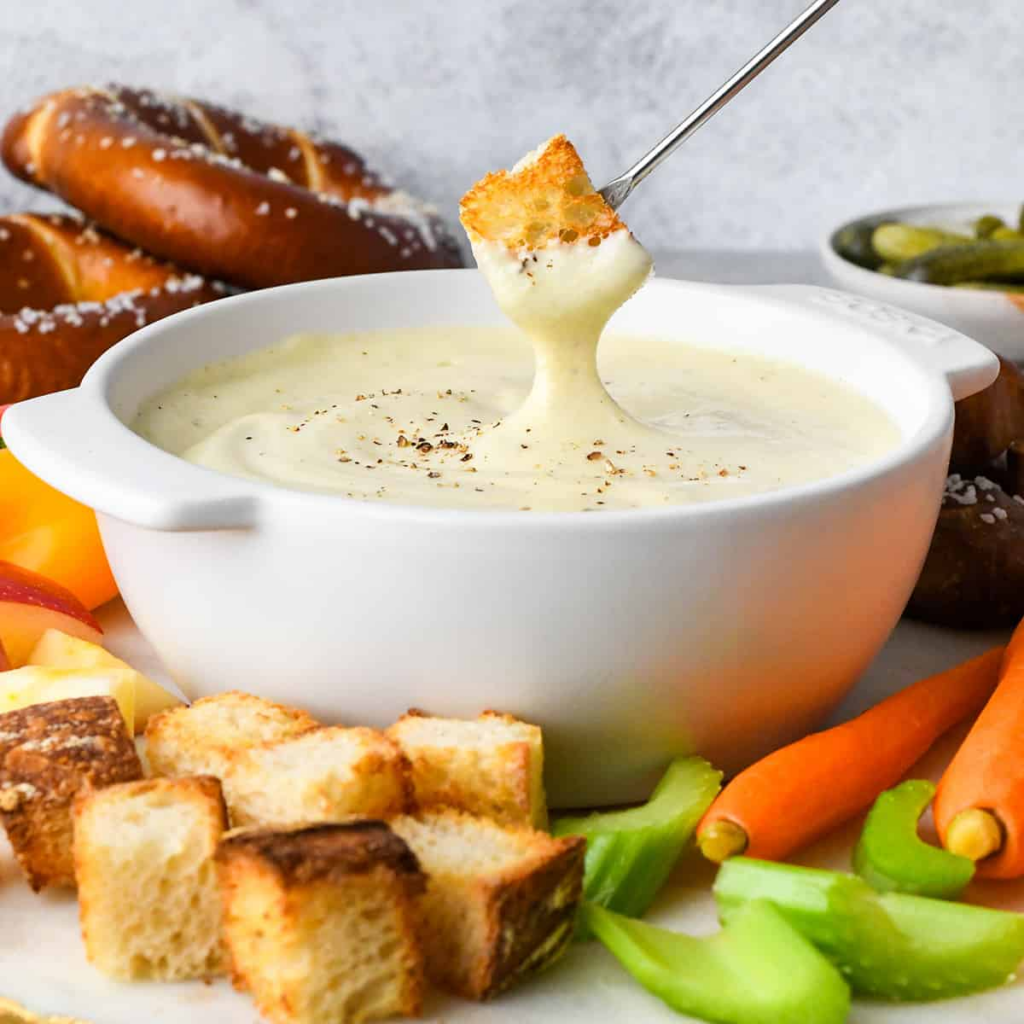
| Breads | Tuscan Boule or Sourdough | Cubed and slightly toasted (stale is better) |
| Vegetables | Red-skinned Potatoes | Steamed until fork-tender |
| Fruit | Granny Smith or Bosc Pear | Sliced thin, tossed in lemon juice |
| Protein | Hard Salami or Cornichons | Room temperature |
Conclusion
Mastering the Swiss Cheese Fondue is an exercise in restraint and chemistry. In a fast-paced 2026, where digital connections often replace physical ones, the fondue pot remains one of the few places where people must slow down, stir together, and share a singular, decadent flame. Whether you’re dipping a pear or fighting over the religieuse, you are participating in a tradition that has survived centuries for a reason: it is fundamentally, deliciously human.
Also Read : Charles Bronson Reveals His Most Memorable Inmates During 50 Years Inside
