
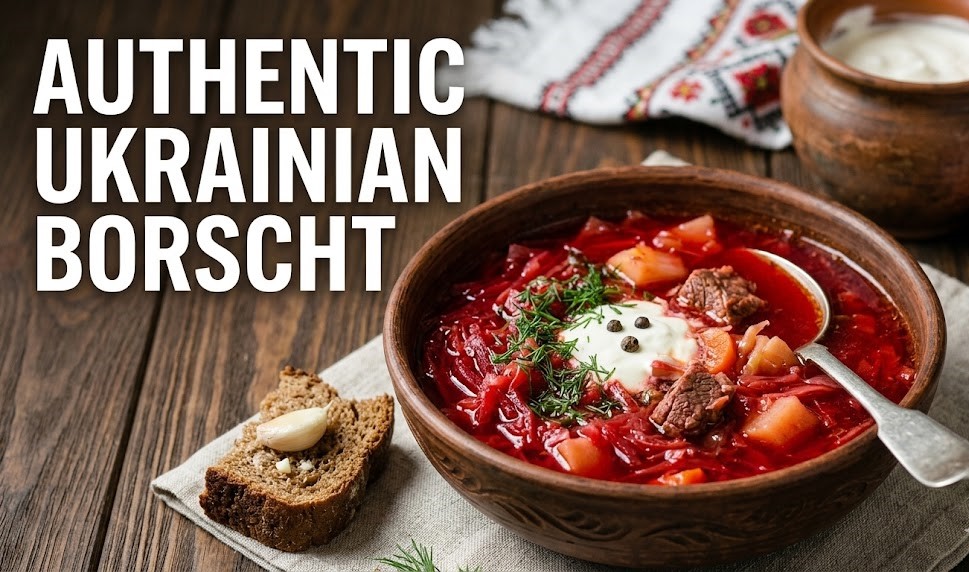

As we navigate the final chill of early spring, there is perhaps no dish more culturally resonant or physically warming than a steaming bowl of Ukrainian Red Borscht. This isn’t just a soup; it’s a vibrant, ruby-red masterpiece that has earned its place on the UNESCO List of Intangible Cultural Heritage.
Whether you are honoring the deep-rooted traditions taught by a Ukrainian babusia or discovering the magic of root vegetable cooking for the first time, this recipe delivers a complex balance of sweet, savory, and sour. In 2026, as we prioritize nutrient-dense “slow food,” Borscht stands out as the ultimate metabolic fuel.
01. The Anatomy of Authenticity: What Makes it Borscht?
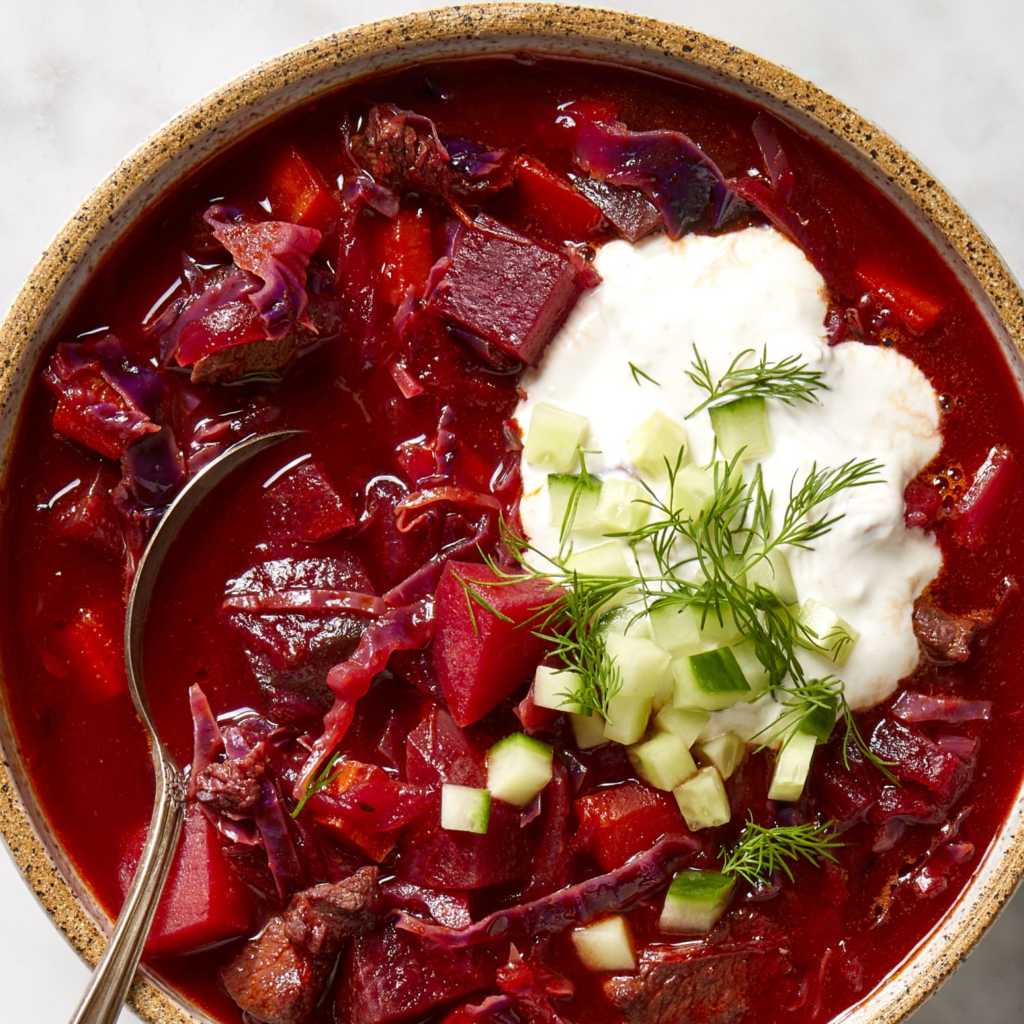
Borscht varieties exist across Eastern Europe, but the Ukrainian version is iconic for its use of beets. These roots provide the soup’s signature color and a natural sweetness that is traditionally balanced by an acidic component—like tomatoes or a splash of vinegar—to ensure the soup remains a bright crimson rather than a muddy brown.
02. The Ingredient Blueprint
This recipe yields approximately 10 servings. For a modern 2026 kitchen, we’ve included metric conversions to ensure the perfect ratio of veg-to-broth.
| Ingredient | Quantity | Note |
| Pork Sausage | $450\text{g}$ ($16\text{ oz}$) | Crumbled and browned for a savory base. |
| Fresh Beets | $3$ medium ($375\text{g}$) | Peeled and shredded. |
| Baking Potatoes | $3$ medium ($450\text{g}$) | Peeled and cubed. |
| Cabbage | $1/2$ head ($400\text{g}$) | Cored and finely shredded. |
| Carrots | $3$ large | Peeled and shredded. |
| Tomato Paste | $170\text{g}$ ($6\text{ oz}$) | Adds deep umami and acidity. |
| Water | $2.1\text{ Liters}$ | Divided for the pot and the paste slurry. |
| Garlic | $3$ cloves | Minced for bold aromatics. |
| Sugar | $1\text{ tsp}$ | To balance the acidity of the tomatoes. |
03. Instructions: The Layered Simmer
- The Protein Base: Crumble the pork sausage into a skillet over medium-high heat. Cook until no longer pink. Set aside.
- The Primary Boil: Bring about $1.9\text{ Liters}$ of water to a boil in a large pot. Add the cooked sausage, cover, and return to a boil.
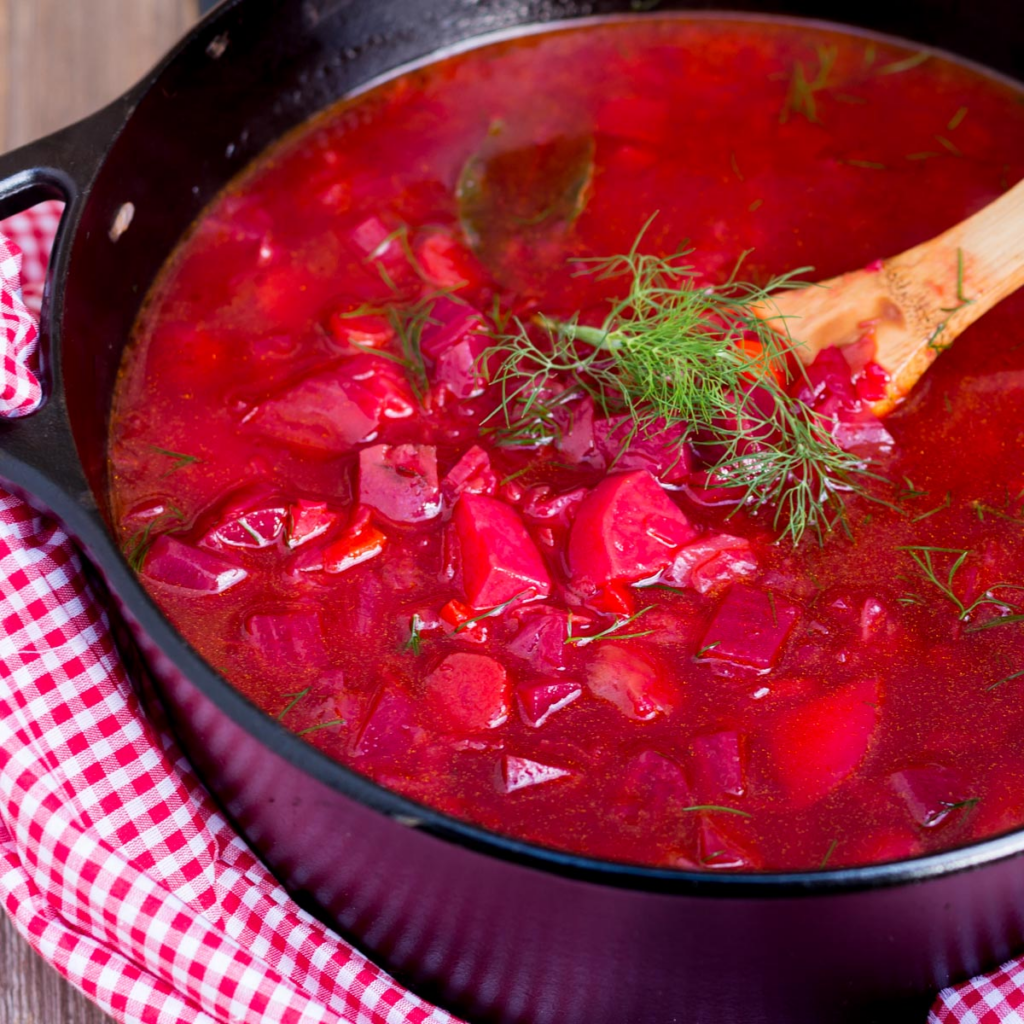
- The Root Phase: Add the shredded beets and simmer for 10 minutes. Follow with the carrots and potatoes, simmering for another 10 minutes until the potatoes are tender-crisp. Stir in the cabbage and drained diced tomatoes.
- The Flavor Slurry: In a separate skillet, sauté the chopped onion in $1\text{ tbsp}$ of oil until tender. Stir in the tomato paste and $180\text{ml}$ ($3/4$ cup) of water. Once blended, transfer this mixture to the main soup pot.
- The Finishing Touch: Add minced garlic, turn off the heat, and let it stand covered for 5 minutes. Stir in the sugar, salt, and pepper.
- The Garnish: Ladle into bowls and top with a generous dollop of sour cream and fresh dill.
04. Pro-Tips for 2026 Culinary Success
The Community “Crunch” Fix: According to Allrecipes Community Reviews, a common 2026 tweak is to sauté the shredded beets with a teaspoon of vinegar or lemon juice before adding them to the pot. This preserves the color and ensures they soften perfectly without staying “crunchy.”
- Vegetarian Swap: Simply omit the sausage and use a rich vegetable stock instead of water.
- Storage Logic: Borscht is famously better the next day. Store in an airtight container for 3 days or freeze for up to 2 months. Make sure to leave an inch of space at the top of your freezer-safe containers for expansion.
Conclusion
Ukrainian Red Borscht is more than just a meal; it’s a bowl of liquid comfort that connects the past with the present. As we look at the culinary trends of 2026, the focus is squarely on dishes that tell a story and provide a massive nutritional punch. With its heavy dose of antioxidants from the beets and the hearty protein from the sausage, this soup is a “keeper” for any home cook’s digital recipe box.
Also Read : EU–Mercosur farmers protests – latest key developments