
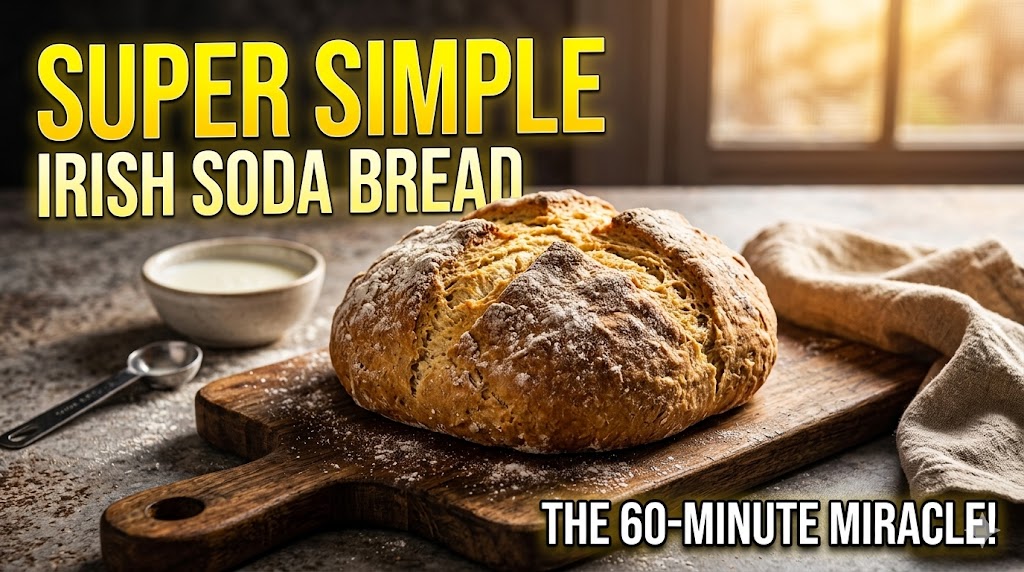

It is late March 2026, and if your kitchen is still echoing with the remnants of St. Patrick’s Day festivities, you know that the real star of the Irish table isn’t just the corned beef—it’s the bread. Specifically, the Irish Soda Bread. While we often obsess over the long, slow fermentation of sourdough, soda bread is the ultimate “instant gratification” loaf.
It is a bread born of necessity and chemistry, relying on a violent, beautiful reaction between acid and base rather than the slow biological crawl of yeast. If you have five minutes of hands-on time and an oven, you are less than an hour away from a crusty, biscuit-like masterpiece.
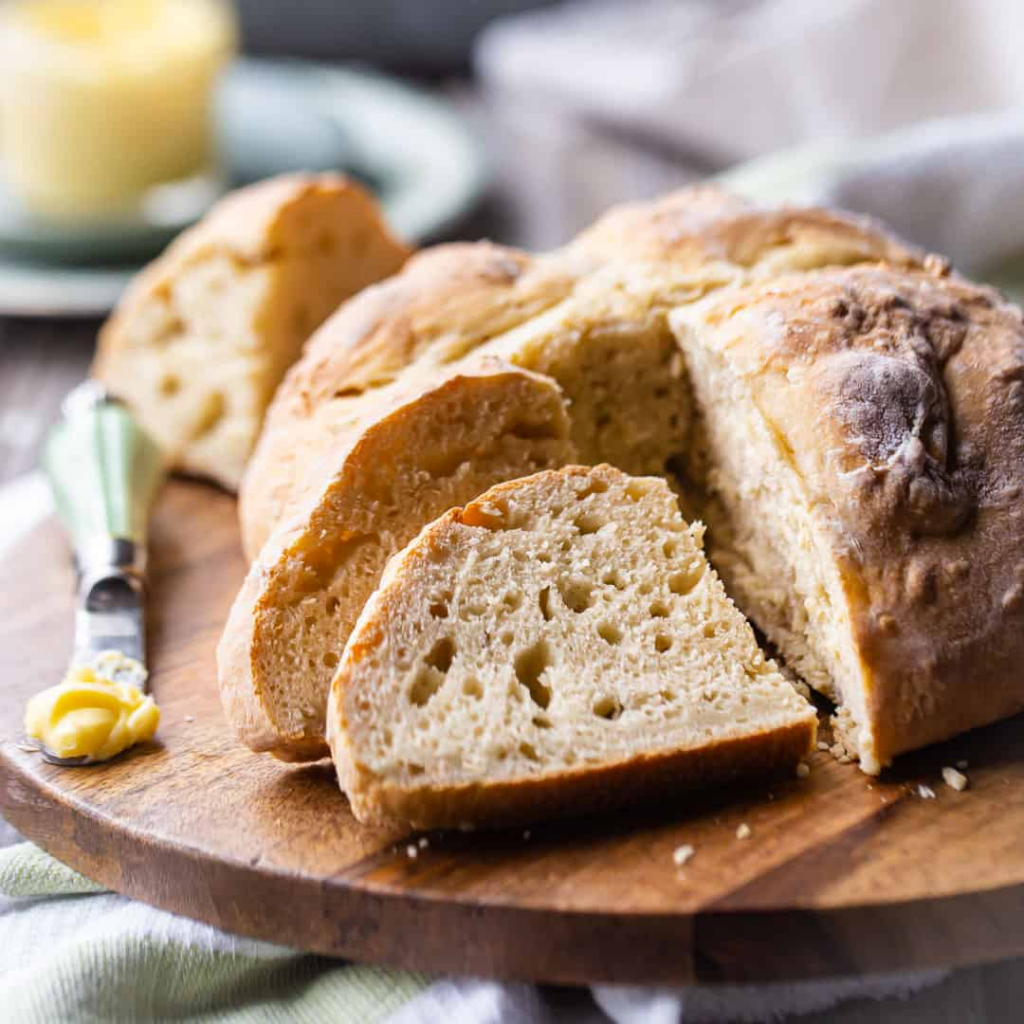
01. The Chemistry of the Rise: Acid meets Base
Unlike traditional boules, Irish soda bread is a “quick bread.” The magic happens through a chemical reaction involving Sodium Bicarbonate ($NaHCO_3$) and the Lactic Acid found in buttermilk. When these two meet, they produce Carbon Dioxide ($CO_2$) gas almost instantly.
According to the King Arthur Baking guide on leavening agents, the reaction is immediate, which is why you must move quickly once the wet meets the dry. The basic equation for this kitchen alchemy is:
$$NaHCO_3 + H^+ \rightarrow Na^+ + H_2O + CO_2$$
Because there is no gluten development via kneading, the crumb remains tender and scone-like. As noted in the Exploratorium’s Science of Bread, the lack of yeast means no fermentation time is required, making it the perfect solution for the “I forgot to buy bread” panic.
02. Cultural Evolution: The Traditional vs. The Riches
Purists will tell you that traditional soda bread contains only four ingredients: flour, salt, buttermilk, and soda. However, the “Americanized” version—often called “Spotted Dog” if it contains currants—adds eggs, sugar, and butter for a richer, more cake-like texture.
As the Society for the Preservation of Irish Soda Bread points out, the “X” cut on top isn’t just for aesthetics; it was traditionally believed to “let the fairies out,” though scientifically, it allows the heat to penetrate the thickest part of the dough, preventing the center from staying gummy.
03. The Master Ingredient List & Ratios
For a perfect loaf, precision in your salt-to-flour ratio is key. Professional bakers use a 2–3% salt-to-flour weight ratio to ensure the flavor isn’t flat.
| Ingredient | Weight (Grams) | Volumetric |
| All-Purpose Flour | $510\text{g}$ | 4 Cups |
| Buttermilk | $410\text{g}$ | 1.75 Cups |
| Kosher Salt | $12\text{g}$ | 2 tsp |
| Baking Soda | $5\text{g}$ | 1 tsp |
| Sugar | $13\text{g}$ | 1 tbsp |
| Melted Butter | $28\text{g}$ | 2 tbsp |
| Egg | ~ $50\text{g}$ | 1 Large |
Pro-Tip: If you are out of buttermilk, you can create a substitute by adding $2\text{ tbsp}$ of vinegar or lemon juice to milk and letting it stand for 10 minutes to curdle.
04. Preparation & Variations
According to the original Alexandra’s Kitchen Irish Soda Bread recipe, the process is as simple as whisking dry ingredients, folding in the wet, and baking in a cast-iron skillet for 35–40 minutes at $400^\circ\text{F}$.
- Whole Grain Version: For a heartier loaf, swap 1.5 cups of AP flour for whole wheat and add 0.5 cups of wheat germ. This mimics the rustic “Brown Bread” found in Irish farmhouses.
- The Sourdough Twist: In 2026, many home bakers are using sourdough discard to add tang to their soda bread. Adding $100\text{g}$ of discard adds a layer of complexity that plain buttermilk can’t match.
Conclusion
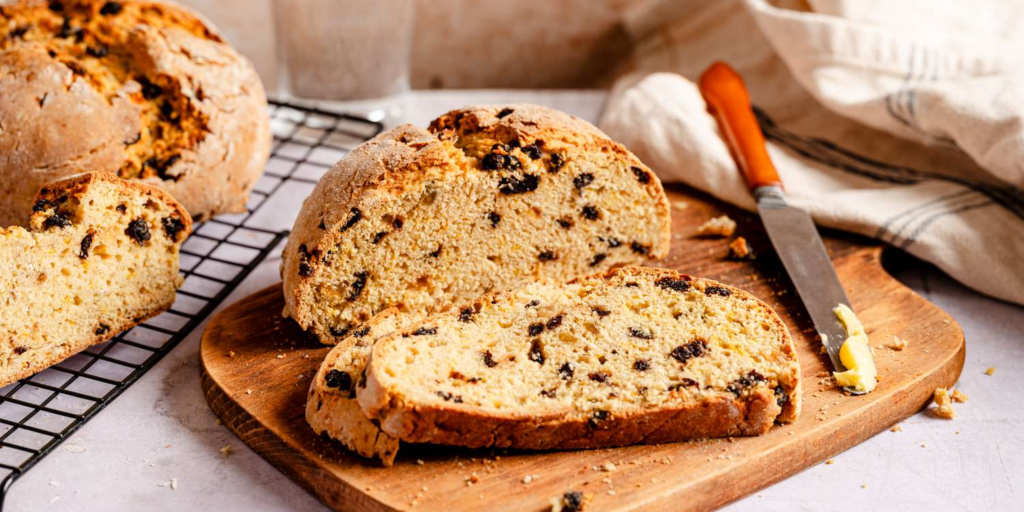
Irish Soda Bread is a reminder that some of the best things in life don’t require 24 hours of cold-proofing or a high-maintenance starter. It is a nostalgic dream—crispy on the outside, tender on the inside, and begging for a thick slather of salted butter or orange marmalade. Whether you are honoring your heritage or just looking for a 60-minute kitchen win, this bread is a reliable, rustic staple that never fails to deliver.
Also Read : Sarwar’s Biggest Political Gamble: Calling for Starmer to Resign