

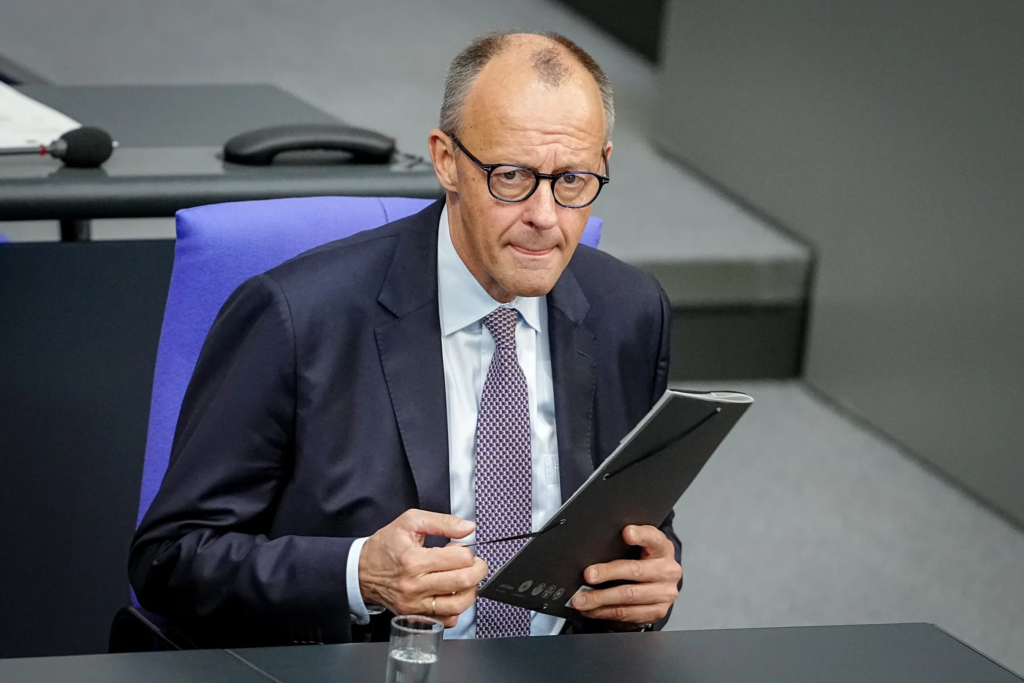
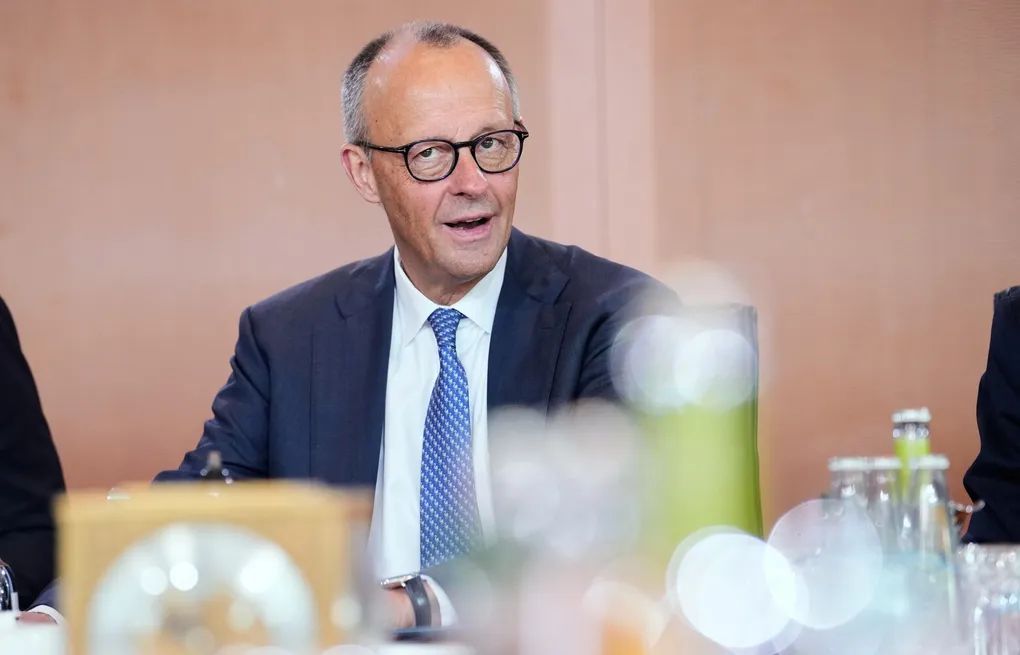
German Chancellor Friedrich Merz’s groundbreaking plan to grant Ukraine “associate membership” in the European Union has received mixed reviews in Brussels, with questions raised about its legality, feasibility and political implications.
In a letter to his fellow leaders, seen by Euronews, Merz proposes a tailor-made status that would give Ukraine access to decision-making bodies without voting rights or portfolio and to certain EU-funded programmes on a “step-by-step” basis.
He also envisions Kyiv able to request assistance from other member states in the event of armed aggression through Article 42.7 of the EU treaties. This, he argues, would create a “substantial security guarantee” to deter Russia.
“It is now time to boldly move on with Ukraine’s EU integration through innovative solutions as immediate steps forward,” Merz tells his peers.
In Brussels, Merz’s letter drew attention and raised eyebrows amid ongoing efforts to lift Hungary’s veto on Ukraine’s accession by the time the 27 leaders meet in June.
His push was compared to the op-ed that the chancellor wrote last year endorsing the use of Russia’s immobilised assets to finance a so-called reparations loan to Ukraine. The op-ed shocked Brussels, and the audacious project eventually collapsed.
The letter is “a rather hasty statement, and not very well coordinated. The timing is strange, especially since in June we will have good news with the opening of the cluster, so this letter is a bit surprising,” said a diplomat, warning of widespread scepticism.
“We need to do things differently. There is indeed a timeline, with June in view, and there is a method. Things will move forward.”
A second diplomat cast serious doubt on Merz’s assertion that the “associate membership” would not require amending the EU treaties, just strong political will.
“I don’t see how this could work from a legal point of view. You would need to change the treaties for that. Associate members with all institutions by way of political arrangement? I don’t see it,” the diplomat said.
A third diplomat said that in the letter, “some ideas are better than others”, while a fourth noted the real debate among member states was yet to begin.
‘Merit-based’ focus
By contrast, the European Commission, which oversees the accession process, was more positive and welcomed Merz’s proposal as showing a “strong commitment from member states to make enlargement a reality as soon as possible”.
“It is increasingly clear that enlargement is a geostrategic investment in our prosperity, peace, and security. And Ukraine’s accession to the European Union is also fundamentally linked to the security of our union,” Guillaume Mercier, the Commission’s spokesperson for enlargement, said in a statement.
“It is equally important that we deliver on the completion of the Union with all the candidate countries that have been working towards accession for many years.”
Mercier noted that any innovative solution should be underpinned by the “merit-based” logic that is supposed to guide the complex multi-chapter accession process.
Earlier this year, the Commission pitched a “reversed” membership under which Ukraine would become a formal EU member and progressively obtain the tangible benefits that come with it. Capitals largely rebuffed the idea, calling it dangerous and unrealistic.
Merz’s pitch suggests gradual integration to access EU funds and high-level fora, but with formal membership only at the very end of the road.
The German letter comes as the bloc sees a window of opportunity to finally lift the Hungarian veto on Ukraine’s accession, which has left the process paralysed for two years. The new government in Budapest has launched consultations with Kyiv to discuss the rights of the Hungarian minority in Ukraine, a politically sensitive issue.
Brussels hopes that enough progress will be made to lift the veto in June and open the first cluster of negotiations with Ukraine, known as fundamentals, with the remaining five clusters unblocked across the remainder of the year.
It remains unclear how Ukrainian President Volodymyr Zelenskyy will react to Merz’s letter. Last month, he flat-out rejected any overture for “symbolic” membership.
“Ukraine is defending itself and is definitely defending Europe,” he said. “And it is not defending Europe symbolically – people are really dying.”
Also Read : Chaos Online as Cloudflare Outage Crashes Major Websites
