
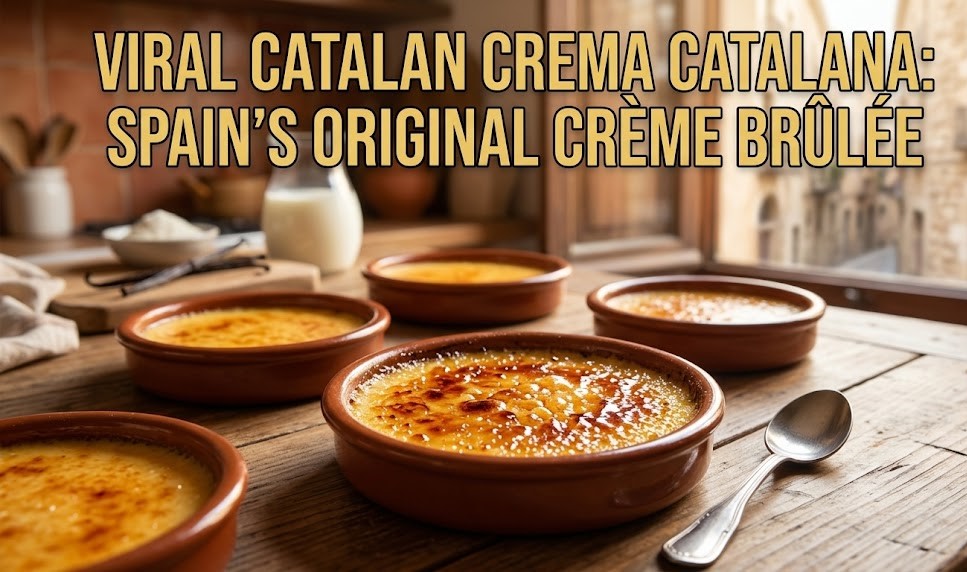

Crema Catalana is the quintessential Spanish dessert. Dating back to at least the 14th century, it is traditionally served on Saint Joseph’s Day (March 19) but is beloved year-round across Spain. While often compared to its French cousin, crème brûlée, this Catalan classic is lighter, more delicate, and infused with the bright Mediterranean flavors of cinnamon, lemon, and orange.
Because it is made with milk rather than heavy cream and thickened on the stove rather than baked in a water bath, Crema Catalana is a more approachable, gluten-free dessert for the home cook.
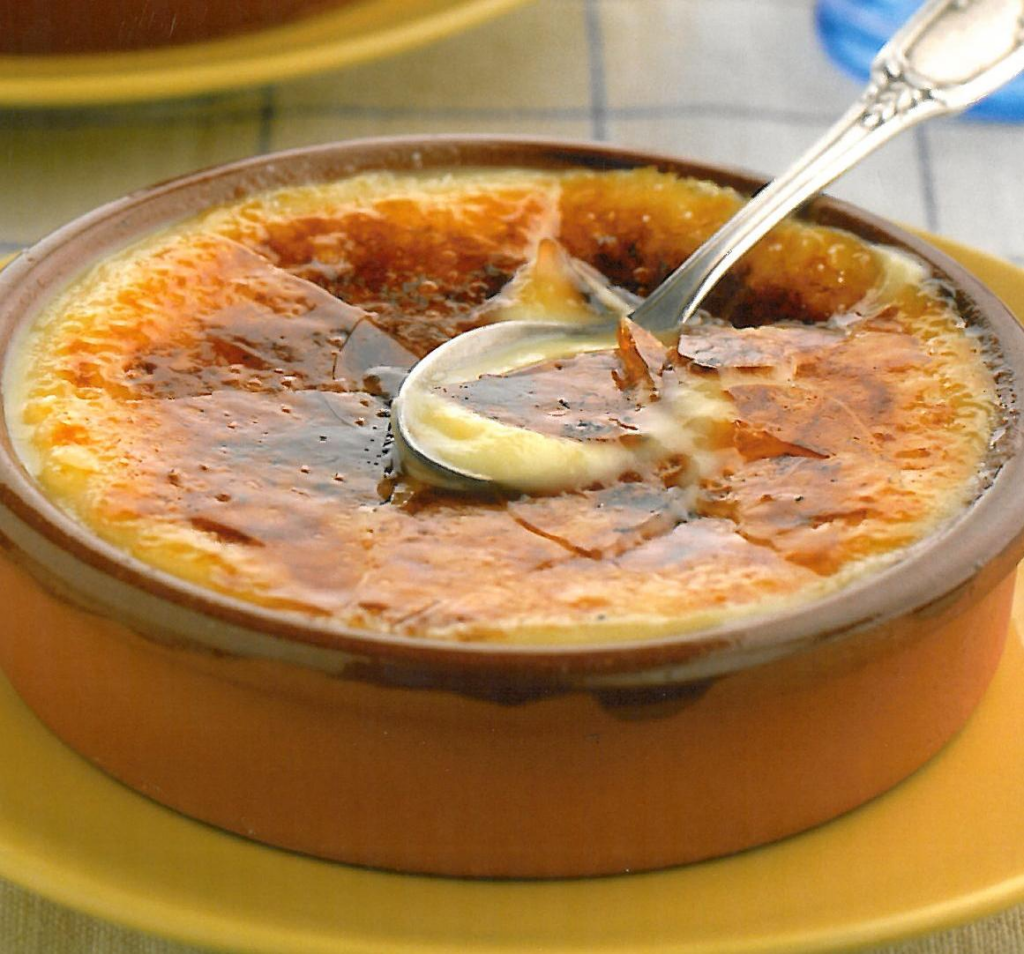
Crema Catalana vs. Crème Brûlée: The Difference
While both share a signature “crack” from a caramelized sugar crust, the internal nuances are distinct:
- Crema Catalana (Spain): Made with whole milk, thickened with cornstarch and egg yolks, and flavored with cinnamon and citrus zest. It is cooked on the stovetop.
- Crème Brûlée (France): Made with heavy cream, thickened only with egg yolks, and flavored with vanilla. It is typically baked in the oven using a bain-marie (water bath).
Because Crema Catalana uses milk, it has a silkier, less heavy mouthfeel—making it the perfect follow-up to a savory Mediterranean meal like Easy Seafood Paella.
Ingredients You’ll Need
- Whole Milk: Essential for the right creamy texture. Avoid low-fat substitutes.
- Egg Yolks: The primary rich thickener.
- Cornstarch: Provides structure and prevents the yolks from curdling during the simmer.
- Sugar: Used for both the custard base and the scorched topping.
- Citrus Zest: One strip each of lemon and orange (avoid the bitter white pith).
- Cinnamon Stick: Gently infuses the milk with warmth.
How to Make Crema Catalana (Step-by-Step)
- Whisk the Base: Whisk 8 egg yolks with 1/2 cup sugar, 3 tbsp cornstarch, and 1/2 tsp salt until pale and smooth.
- Infuse the Milk: In a heavy saucepan, bring 4 cups of milk, the citrus zest, and the cinnamon stick to a bare simmer. Remove from heat and discard the aromatics.
- Temper the Eggs: This is the most critical step. Slowly pour the hot milk into the egg mixture in a thin stream while whisking constantly. This prevents the eggs from scrambling.
- Thicken on the Stovetop: Return the mixture to the pan. Cook over medium-low heat, whisking constantly. Once it bubbles, cook for exactly one minute to activate the cornstarch, then remove immediately.
- Chill: Strain through a sieve into ramekins. Press plastic wrap directly onto the surface to prevent a “skin” from forming. Chill for at least 4 hours (or up to 4 days).
- Caramelize: Just before serving, sprinkle sugar on top and use a kitchen torch to melt it into a deep brown, glass-like crust.
Professional Success Tips
- The “Slow Pour”: Adding the milk too fast is the #1 cause of lumpy custard. Take your time during tempering.
- Avoid Overcooking: Once the custard bubbles, the egg proteins become fragile. Stop at the one-minute mark.
- Wait to Torch: Only caramelize the sugar right before serving. Sugar is hygroscopic, meaning it absorbs moisture from the air. If left in the fridge, the crunchy crust will turn into a sticky syrup.
- Safety First: When using a kitchen torch, ensure your ramekins are heat-safe. If you don’t have a torch, the American Academy of Nutrition and Dietetics suggests using a broiler, but watch it every second to avoid burning.
Conclusion
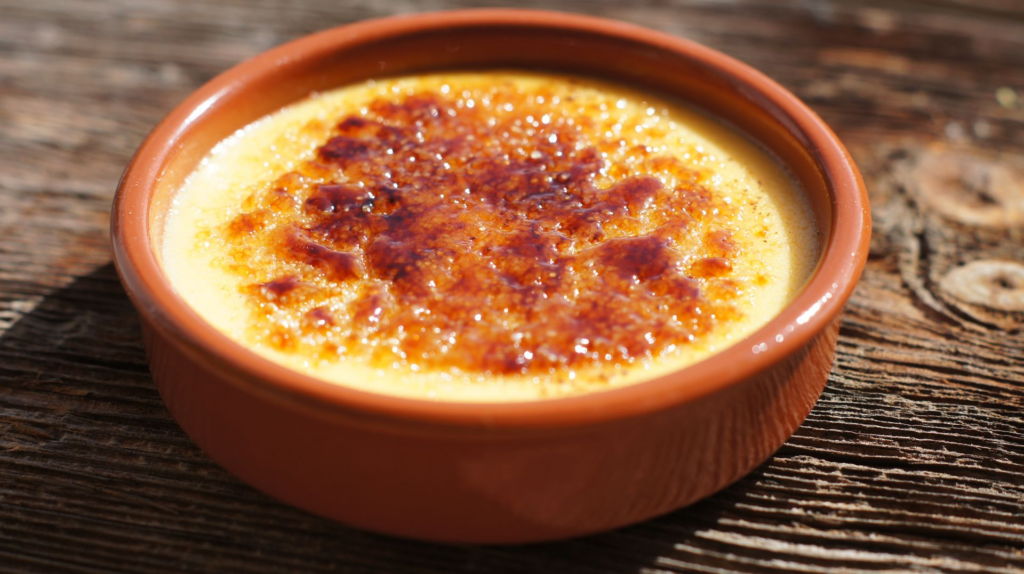
Crema Catalana is a masterclass in Mediterranean simplicity. By utilizing whole milk and bright aromatics, it achieves a sophisticated flavor profile that is lighter than traditional French custards. Whether you are celebrating Father’s Day in March or simply looking for a festive dinner party finale, this “burnt cream” offers a dramatic and delicious taste of Catalonia.
Also Read : 12 MUST-Visit European Destinations