
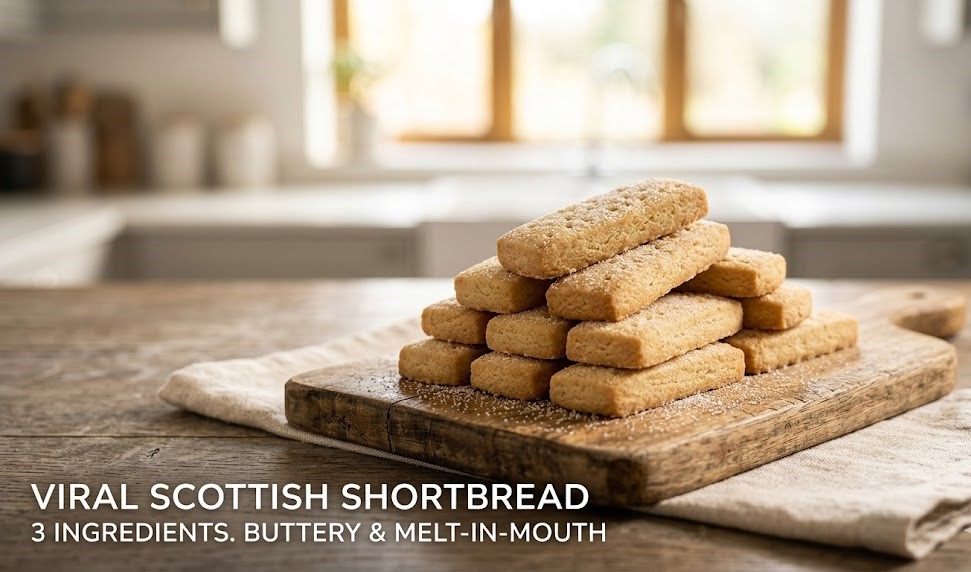

It is March 31, 2026, and if your pantry is currently lacking a pink box of buttery goodness, you are missing out on the ultimate comfort ritual. For centuries, Scottish shortbread has been the gold standard of biscuits—a cultural obsession popularized recently by the Ted Lasso “pink box” phenomenon. While Walker’s Shortbread remains the commercial benchmark we all know, a homemade version offers a faster melt-in-your-mouth sensation and a superior “crumble” that store-bought versions simply can’t replicate.
Whether you are hosting a sophisticated tea or just need a decadent mid-afternoon hit, these three-ingredient wonders are proof that the simplest recipes are often the most profound.
The “Short” History: From Luxury to Legacy
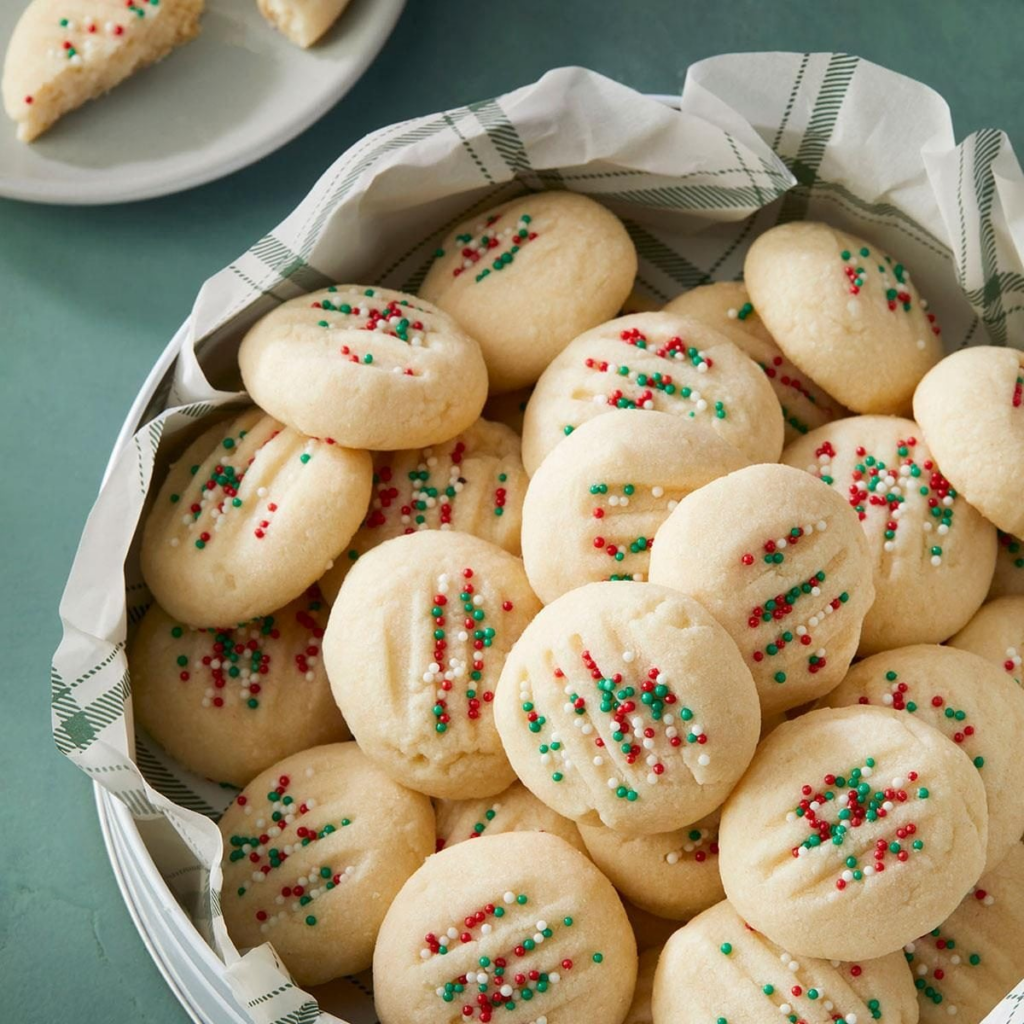
Shortbread originated in Scotland in the 1700s, with roots deep in VisitScotland traditions where it was once a luxury reserved for weddings. The name “shortbread” refers to the high fat content (butter) that “shortens” the gluten strands, making the dough crumbly rather than elastic. In 2026, we’ve added a modern twist: the “Zing Balance.” By slightly increasing the salt ratio, we elevate the sweetness and keep the palate engaged.
The Ingredient Blueprint
To beat the commercial giants, quality is non-negotiable. The science of these fat-to-flour ratios, as detailed by King Arthur Baking, relies on the precision of your chill time.
| Ingredient | Quantity | The 2026 Standard |
| Unsalted Butter | 225g | High-fat, European-style is best for texture. |
| Icing Sugar | 65g | Sifted to ensure a silky, non-gritty crumb. |
| Salt | 1 tsp | Fine sea salt provides the perfect “zing.” |
| All-purpose Flour | 250g | Sifted to keep the biscuits light. |
| Vanilla Extract | 1/3 tsp | Pure extract for a deep, aromatic finish. |
Instructions for the Perfect Melt
- The Creaming Phase: Mix the butter, icing sugar, salt, and vanilla using an electric mixer until fluffy. Scrape the bowl often to ensure total homogeneity.
- The Flour Fold: Gently incorporate the flour with a spatula. Do not overwork the dough; we want a “short” crumb, not a tough bread.
- The Chill Factor: Roll the dough between two sheets of baking paper to a thickness of 5mm. Refrigerate for 1-2 hours until firm. This prevents spreading and ensures sharp edges.
- The Architecture: Cut into 2 x 5cm rectangles. Poke the signature holes with a skewer and sprinkle with granulated sugar.
- The Gold Bake: Bake at 180°C (350°F) for 12–15 minutes. They should be pale, with only a whisper of gold at the edges.
Pro-Tips and Creative Twists
The “Make-Ahead” Hack: Shortbread dough is incredibly freezer-friendly. You can find more buttery, crumbly tips and variations at Cravings Journal. You can freeze the dough (already cut into shapes) for up to a month and bake them straight from the freezer for a “freshly-baked” emergency treat.
- Decadent Dip: Once cooled, dip half the cookie in 70% dark chocolate and sprinkle with edible flowers.
- The Savory Shift: Omit the sugar and vanilla. Add grated Parmesan and chopped rosemary for a sophisticated addition to a cheese board.
- The Presentation: For the full experience, serve these in a small pink box. It turns a simple cookie into a meaningful gesture.
Conclusion
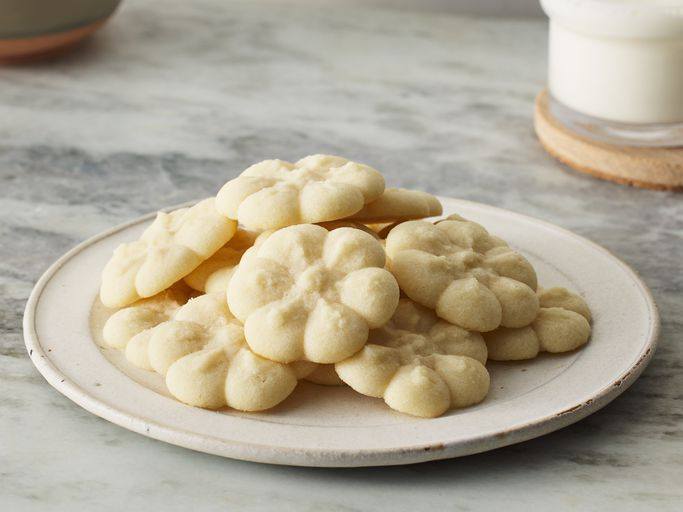
Lorena Salinas’s take on this Scottish classic proves that homemade is always worth the effort. It respects the centuries-old tradition while perfecting the salt-to-sugar ratio for a 2026 palate. In a world of over-processed snacks, the shortbread cookie remains the undisputed champion of the “melt-in-your-mouth” sensation.
Also Read : Viral Portuguese Pastel de Nata Recipe (Creamy Custard Tarts, Crispy Shell)