
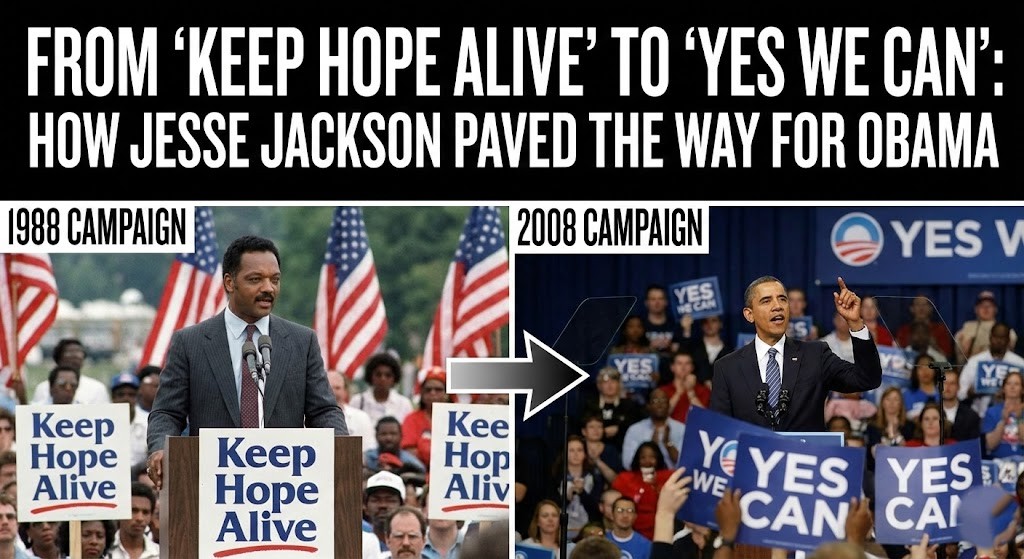

When Barack Obama accepted the presidency in Grant Park in 2008, cameras caught a poignant moment in the crowd: tears streaming down the face of Jesse Jackson.
For the veteran civil rights leader, it was more than just a political victory; it was the culmination of a journey he helped start decades earlier. While Jackson never reached the White House himself, historians and politicians alike agree that without his groundbreaking campaigns in the 1980s, the presidency of Barack Obama—and the rise of leaders like Kamala Harris—might never have happened.
Here is how the “Rainbow Coalition” changed American politics forever.
The Bridge Between Eras
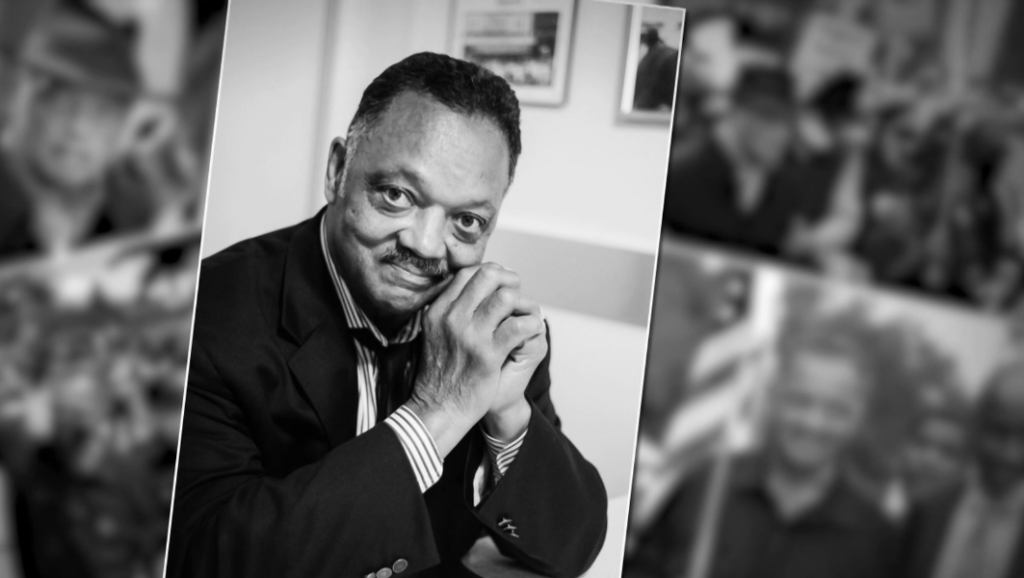
Jesse Jackson occupies a unique space in American history. He serves as the bridge between the protest movements of the 1960s and the boardroom politics of the 21st century.
A protégé of Martin Luther King Jr., Jackson was present at the Lorraine Motel when King was assassinated in 1968. In the aftermath, he didn’t just continue the march; he expanded it. Through his organization Operation PUSH (People United to Serve Humanity), he shifted the focus from racial desegregation to economic justice, arguing that the true divide in America was between the “haves and the have-nots.”
The “Rainbow Coalition” Strategy
Before Jackson, American politics was largely segregated by race and party lines. Jackson disrupted this with the concept of the “Rainbow Coalition.”
He argued that poor African Americans, Latinos, struggling white farmers, and progressive liberals shared common interests.
- The Vision: A multiracial, multi-ethnic democracy.
- The Impact: As Bernie Sanders noted at a recent tribute: “No one else in the Democratic Party was talking about a multiracial, multi-ethnic democracy… This movement wasn’t just about bringing us together, but about bringing us together around a progressive agenda.”
Breaking the Glass Ceiling: 1984 and 1988
Jackson was the first African American to prove that a Black candidate could be a viable contender for the presidency.
- 1984: In his first run, he shocked the establishment by winning over 3 million votes and finishing third in the primaries.
- 1988: His second run was even more historic. He won roughly 7 million votes and 1,023 delegates, briefly leading the frontrunner Michael Dukakis.
This success forced the Democratic Party to reform its primary process, making it easier for insurgent candidates to compete—a change that would benefit future outsiders.
The Obama Connection
The lineage from Jackson to Obama is direct and undeniable.
- Rhetoric: Jackson’s famous 1988 convention speech refrain, “Keep Hope Alive,” laid the emotional groundwork for Obama’s “Hope and Change” message 20 years later.
- Mobilization: Jackson’s campaigns registered millions of new Black voters. This created the engaged political base that Obama needed to win the 2008 primaries.
- Normalization: By performing well on the national stage, Jackson normalized the image of a Black man debating foreign policy and economics at the highest level.
A Complicated Legacy
Jackson’s career was not without controversy. His later years saw scandals regarding his personal life and finances, and he sometimes clashed with the very leaders he helped empower—including a “hot mic” incident where he criticized Obama in 2008.
However, as his health declines due to progressive supranuclear palsy, the political world is taking time to honor his impact. As Congresswoman Pramila Jayapal stated at the 2024 Democratic Convention:
“For every elected official we will see on that stage—we are here because you laid the path for us.”
Also Read : Exploring Germany: Top Cities and Scenic Regions to Visit