


Based on the culinary data you provided, we are examining the Maltese Pastizzi—a cultural staple of Malta characterized by its intensely flaky exterior and rich fillings. While traditional baking often feels like an art, it is fundamentally an exercise in chemistry and physics.
Whether stuffed with a savory curried pea mash or a dense ricotta blend, the success of a Pastizzi relies entirely on the structural integrity of its puff pastry and the nutritional density of its core ingredients. Here is the clinical and physical breakdown of this Mediterranean classic.
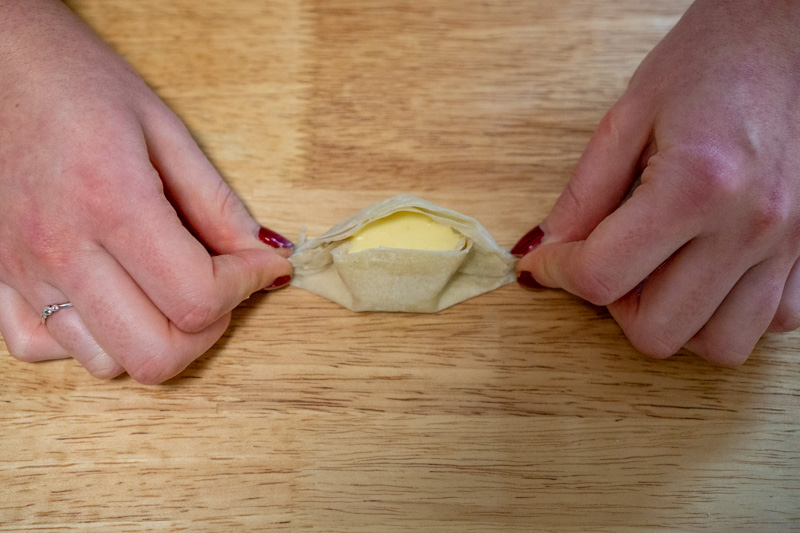
The Physics of Lamination and Steam Expansion
The defining feature of a Pastizzi is its shatteringly crisp, golden shell. This texture is achieved through laminated dough (puff pastry), which consists of alternating microscopic layers of dough and solid fat (usually butter or shortening).
When placed in a $350^\circ\text{F}$ ($175^\circ\text{C}$) oven, a phase transition occurs. The water content within the butter and the dough rapidly converts from a liquid to a gas (steam). Because water expands to approximately 1,600 times its original volume when converted to steam at standard atmospheric pressure, it forces the layers of dough apart before the proteins coagulate and set the structure.
The theoretical volume expansion ($V_{steam}$) can be modeled simply as:
$$V_{steam} \approx 1600 \times V_{liquid\_water}$$
Without this violent, microscopic expansion, the pastry would be dense and unpalatable. This is why you must handle the raw dough as little as possible—heat from your hands melts the fat prematurely, destroying the distinct layers needed for expansion.
Macronutrient Profiles: Ricotta vs. Split Pea
From a nutritional and metabolic standpoint, the two fillings offer entirely different physiological benefits.
- The Curried Pea Filling: Dried split peas are a phenomenal source of complex carbohydrates and soluble fiber. A 3/4 cup serving provides a massive dose of plant-based protein and helps regulate blood glucose levels. The addition of curry powder introduces curcumin, a compound with well-documented anti-inflammatory properties.
- The Ricotta Filling: Ricotta cheese provides a dense source of casein and whey proteins, alongside essential calcium for bone density. The addition of an egg acts as a lipid-based binder, ensuring the filling coagulates tightly during the baking process rather than turning into a liquid that could rupture the pastry.
The Mathematical Scaling of Caloric Density
Puff pastry is incredibly energy-dense ($\rho_{energy}$) due to its high fat content. When preparing meals, precise portion scaling is required to fit these pastries into a balanced metabolic diet.
To easily adjust the base recipe (which yields 32 pastries) for different meal-prep requirements without compromising the structural ratios, use the interactive scaling widget below.
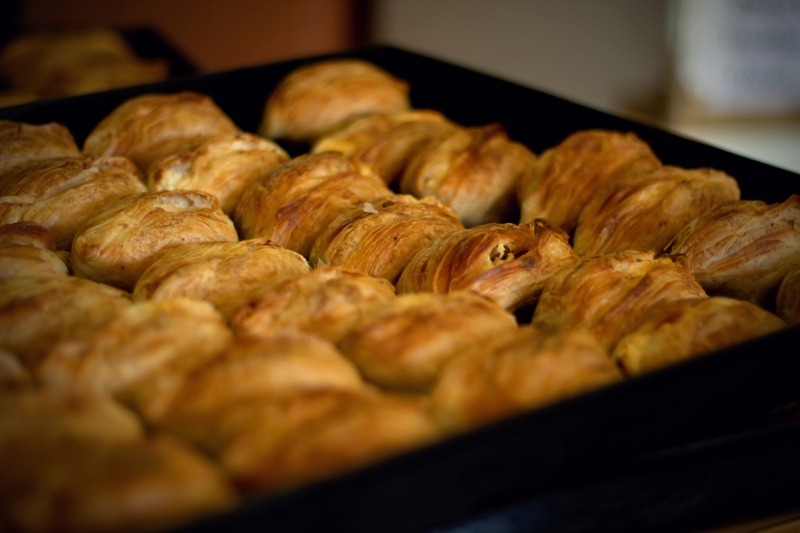
The Pastizzi Yield Scaler
Use the slider below to adjust your target yield. The tool will mathematically scale the ingredients for both the Ricotta and Curried Pea variations, ensuring your ratios remain perfectly balanced for baking.Show me the visualisation
Conclusion
Maltese Pastizzi are a brilliant demonstration of culinary physics. The explosive steam expansion of the laminated dough, combined with the dense nutritional profiles of split peas and ricotta, creates a highly satisfying, culturally significant dish. By understanding the thermodynamic properties of the pastry and carefully scaling your portions, you can enjoy these Mediterranean staples without compromising your metabolic goals.
Also Read : Chris Rea, Singer of Driving Home for Christmas, Dies at 74
