
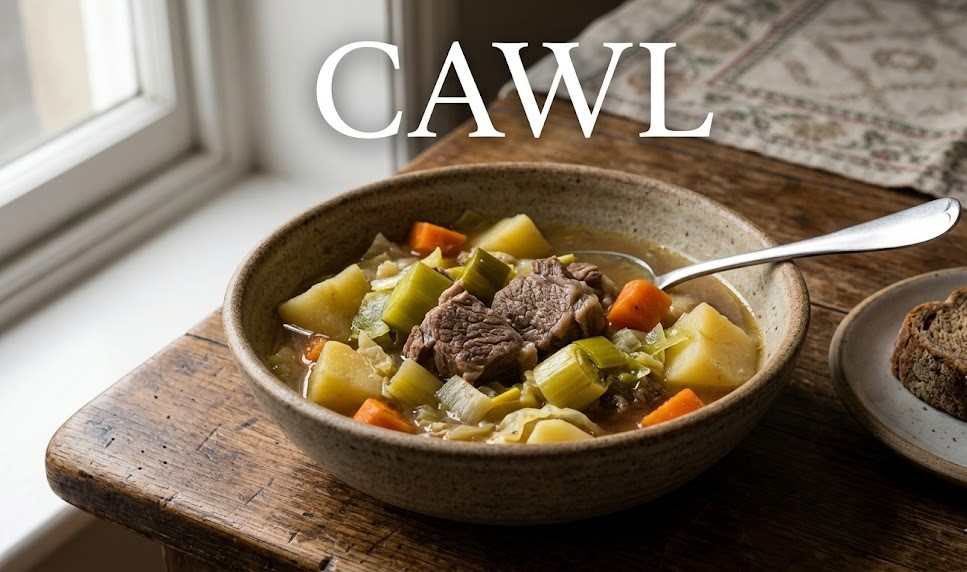

Cawl is more than just a meal; it is a cornerstone of Welsh heritage. This hearty stew, traditionally made with seasonal meat and vegetables, has been sustaining Welsh families for centuries. While recipes vary from town to town—and are often referred to as “lobscows” in parts of North Wales—the essence remains the same: a slow-cooked, deeply flavorful dish that is famously even better the next day.
Whether served in a traditional wooden bowl with a chunk of crusty bread and sharp Welsh cheese or as a modern family dinner, mastering Cawl is an essential step in exploring Welsh culinary traditions.
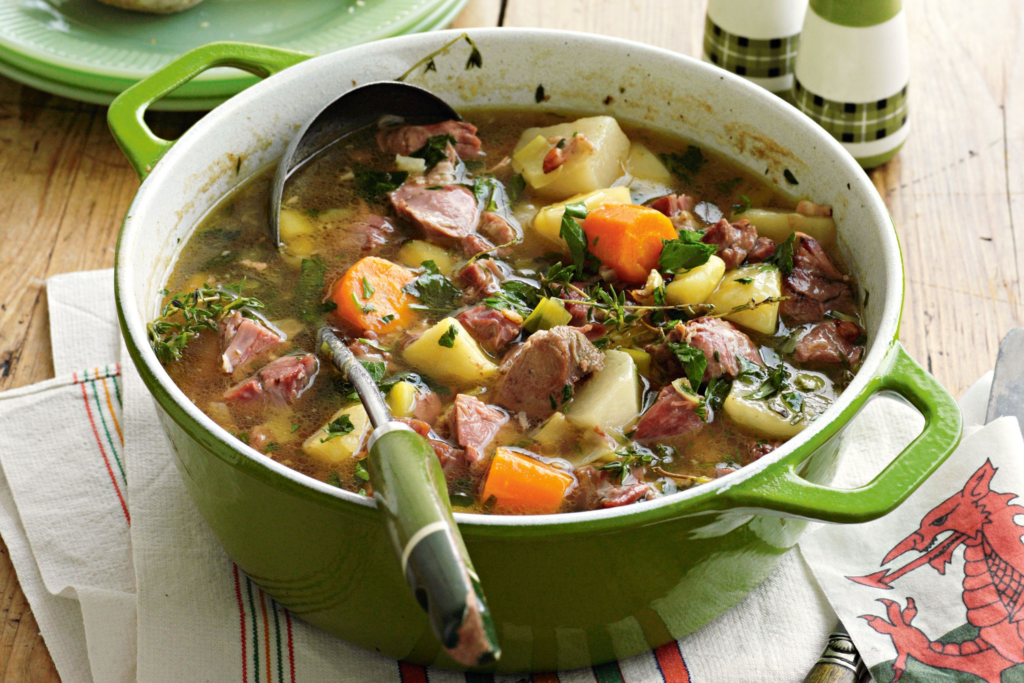
Nutritional Benefits of Slow-Cooked Stews
Cawl is a nutritionally dense meal that aligns well with modern health guidelines.
- Bioavailable Minerals: Slow-cooking meat on the bone allows minerals like calcium and magnesium to seep into the broth. According to the National Institutes of Health (NIH), bone-based stocks are excellent sources of amino acids that support joint health and gut integrity.
- Root Vegetable Power: Carrots, swede, and leeks provide high amounts of fiber and Vitamin A. The CDC emphasizes that a diet rich in diverse vegetables can reduce the risk of chronic diseases.
- Leeks and Immunity: As a national symbol of Wales, leeks are also prebiotic powerhouses. They contain kaempferol, a polyphenol that protects blood vessels and supports the immune system.
Dudley Newbury’s Traditional Cawl Recipe
Serves: 6 | Prep Time: 20 mins | Cook Time: 3 hours
Ingredients
- 1kg Welsh Lamb: Middle neck or shoulder (on the bone for maximum flavor). Alternatively, use Welsh beef or ham hock.
- Vegetables: 1 chopped onion, 6 medium potatoes (peeled/chopped), 3 carrots (peeled/chopped), 1 swede or 2 parsnips (peeled/chopped), and 2 sliced leeks.
- Seasoning: 1 small bunch fresh parsley, vegetable stock, salt, and pepper.
Method
- The First Simmer: Place the meat in a large saucepan, cover with water, and bring to a boil. Simmer for 2–3 hours over low heat. Pro Tip: For the most authentic flavor and health profile, leave the stock to cool overnight. This allows you to easily skim off excess saturated fats the next morning.
- The Build: Remove the meat from the bone, chop into bite-sized pieces, and return to the stock. Add potatoes, carrots, and swede/parsnips. Simmer until tender. Add more stock if needed and season to taste.
- The Finish: Add the sliced leeks and freshly chopped parsley just before serving to maintain their vibrant color and nutrients. If you prefer a thicker consistency, stir in a paste made of water and flour or fine oatmeal.
Safety and Storage Tips
When preparing large batches of stew, food safety is paramount. The FDA recommends cooling large pots of stew quickly by dividing them into smaller, shallow containers before refrigerating. This prevents the “danger zone” temperatures where bacteria can thrive. When reheating your Cawl the next day, ensure it reaches a rolling boil ($165^\circ\text{F}$ or $74^\circ\text{C}$) to ensure it is safe for consumption.
Conclusion
Welsh Cawl is the quintessential “slow food”—a dish that rewards patience with deep, complex flavors and restorative nutrients. By using cheaper cuts of meat on the bone and local root vegetables, you create a sustainable, budget-friendly meal that celebrates the best of Welsh agriculture. Whether you follow Dudley Newbury’s recipe to the letter or add your own family twist, a bowl of Cawl is the ultimate comfort for a chilly Welsh evening.
Also Read : Viral Hungarian Goulash Recipe (Rich, Smoky Beef Stew That Warms Your Soul)
