
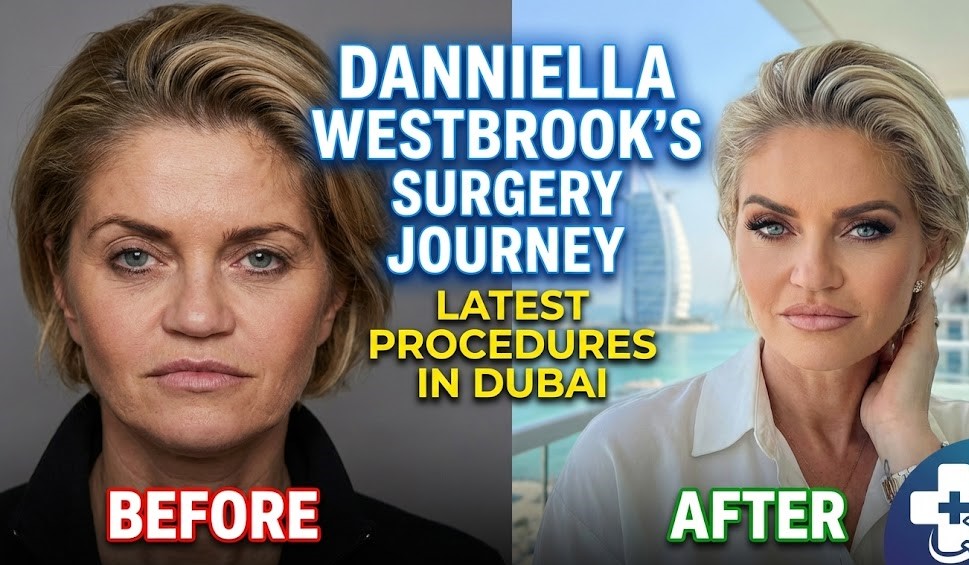

Former EastEnders star Danniella Westbrook has recently undergone another extensive round of facial reconstructive surgery. At 52, Westbrook is continuing her decades-long, highly public journey to repair the severe facial deterioration caused by past struggles with addiction and compounding health complications.
While recent tabloid photos show the actress heavily bandaged and “unrecognizable,” her story is much more than a shocking headline. It is a stark medical reality of the long-term effects of substance abuse and the incredible complexity of modern reconstructive surgery.
Here is a breakdown of her recent procedures, the history behind her health battles, and what this means for her highly anticipated acting comeback.
The Latest Procedures in Dubai
Westbrook recently traveled to Gargash Hospital in Dubai to undergo a complex series of reconstructive surgeries under the care of Dr. Parviz Lionel Sadigh, a highly respected consultant plastic and reconstructive surgeon.
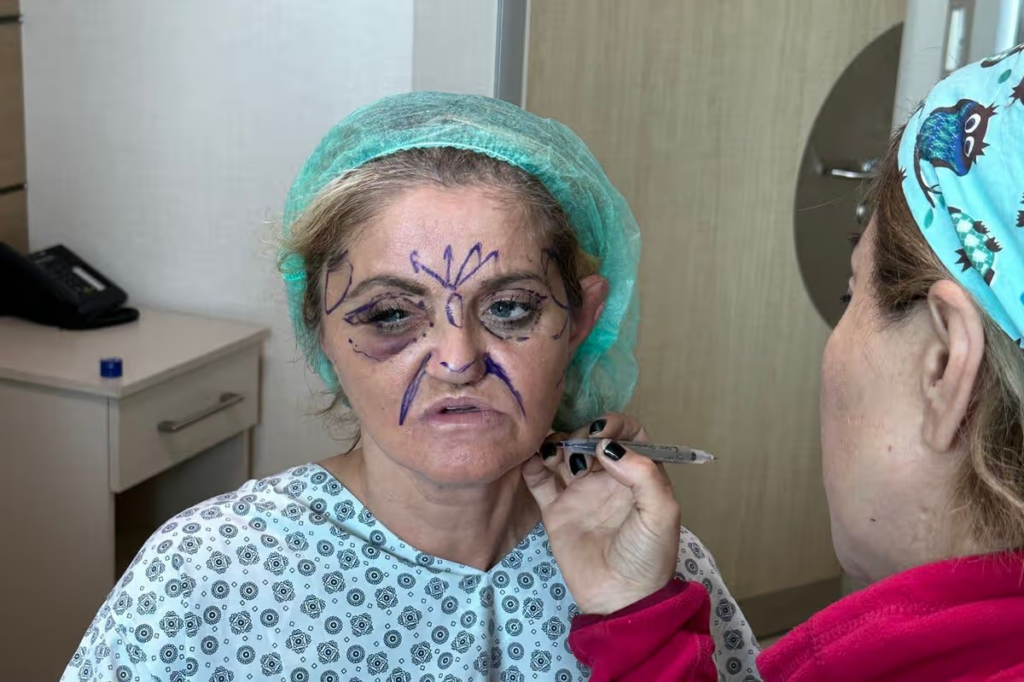
Her latest time under the knife was a comprehensive effort to restore her failing facial structure. The surgery included:
- A full face, neck, and brow lift.
- Extensive surgical lip revision.
- Nose reconstruction to address ongoing structural collapse and severe breathing issues.
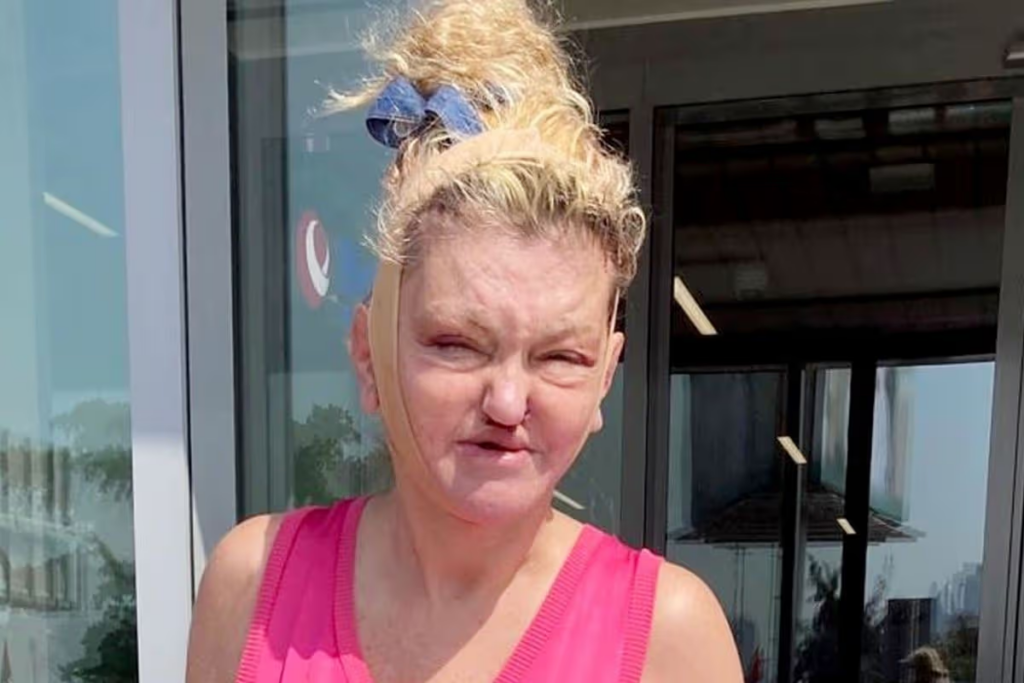
Following the multi-hour operation, Westbrook was photographed leaving the hospital in a wheelchair, wearing heavy bandages with noticeable swelling. Despite the intense physical toll, she remained highly optimistic. She took to Instagram to express her gratitude, writing: “A massive amount of love and respect to my Amazing surgeon @parvizsadigh for all his hard work. Everyday I grow and glow xxxx thank you and roll on Feb for the next operation.”
The Root of the Complications: How Cocaine Affects the Face
To understand the necessity of these intense surgeries, it is important to look at the science behind Westbrook’s well-documented medical history.
Best known for her role as Sam Mitchell on the BBC soap EastEnders, Westbrook battled a severe cocaine addiction during the peak of her fame in the 1990s and early 2000s. Cocaine is a powerful vasoconstrictor, meaning it shrinks blood vessels and severely limits blood flow. Over time, this starves the delicate tissues and cartilage inside the nose of oxygen and nutrients, causing the tissue to die (necrosis) and resulting in a completely collapsed septum.
Over the years, the structural integrity of her face continued to deteriorate, heavily compounded by two other factors:
- Osteoporosis: A condition that weakens bones, which further contributed to the decay of her facial bones, including her jaw and cheekbones.
- Previous Botched Surgeries: Westbrook has spoken candidly about past operations that left her with severe complications, including a receding upper palate.
A Stalled Acting Comeback: Tales From The Trap
The urgency of this latest surgery was brought to light by a terrifying recent health scare on a film set. Westbrook was preparing for her major acting comeback in the new film Tales From The Trap. She was cast as a “gangster granny” who sells AK47s—a gritty role highly anticipated by her fans.
Unfortunately, she was rushed to the hospital just weeks prior with severe breathing difficulties, forcing her to pull out of the project. The lack of structural support in her nose had essentially left her suffocating. Because of this, her latest reconstructive work in Dubai was not merely cosmetic, but a vital medical necessity to restore her basic airway function and quality of life.
Conclusion
Recovery from this level of craniofacial reconstructive surgery is a long and painful process. The swelling and bruising currently visible in her paparazzi photos are standard for such an invasive procedure, and it can take up to a year for the final results to fully settle.
However, Westbrook’s resilience remains strong. Her transparency about her struggles with addiction and the devastating physical consequences serves as a stark reminder of the long-term impacts of drug abuse. Ultimately, her ongoing road to recovery highlights the human capacity for transformation, survival, and second chances.
Also Read : U.S. visa bans on European tech critics and online safety row