
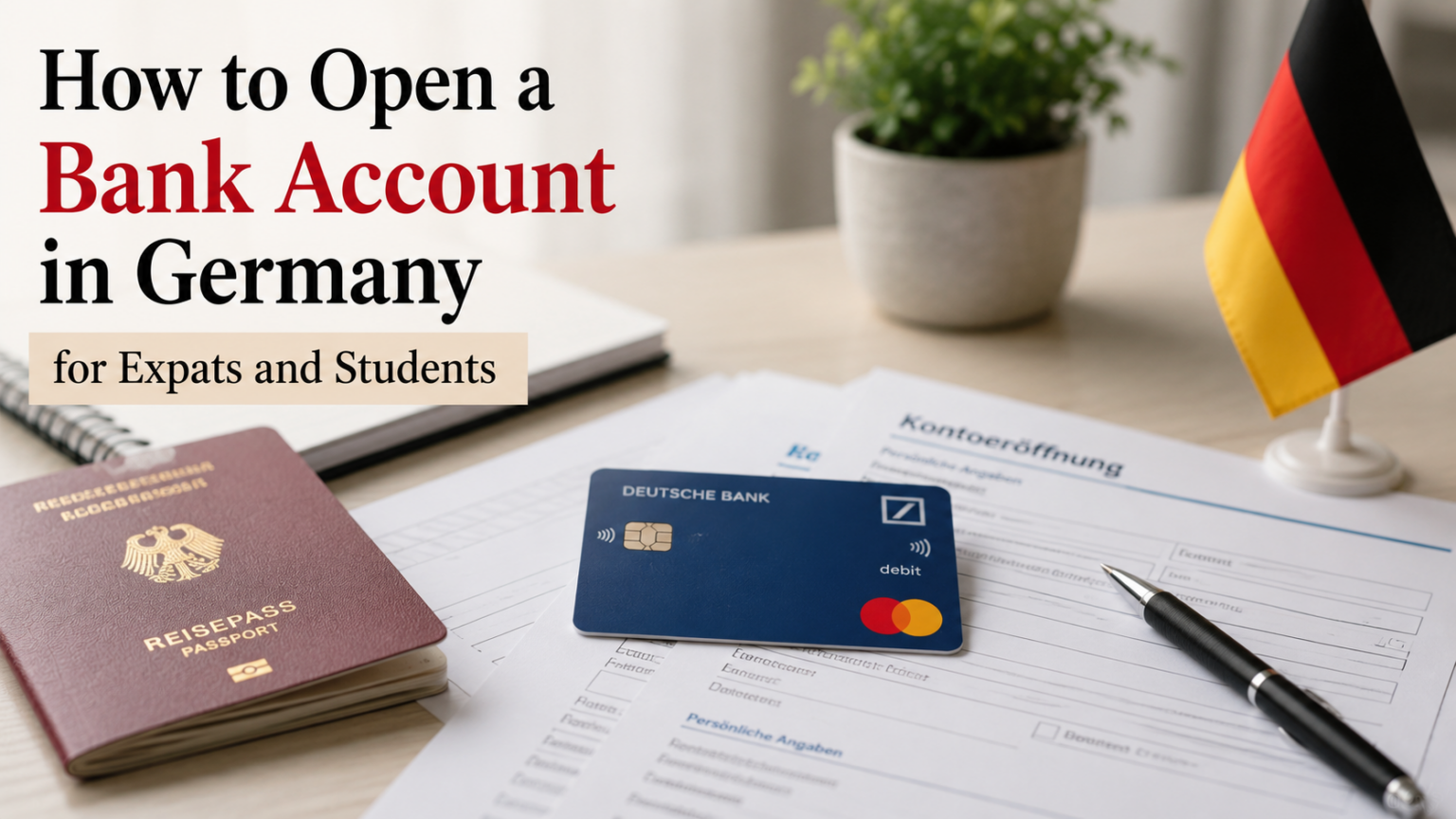

Opening a bank account is one of the first things you will need to do when moving to Germany. It is an essential step for paying your rent, receiving your salary, and handling everyday expenses with ease.
Here is an SEO-optimized breakdown of everything you need to know about setting up your German bank account, whether you are an arriving international student or an expat professional.

The Necessary Documents: What You Need to Apply
To open a standard account in Germany, you typically have to visit a bank branch and present specific identification. Ensure you have the following documents ready to go:
- Passport or Personal Identification Card.
- Registration Certificate (Meldebescheinigung): You receive this after completing your Anmeldung (address registration) at the local Resident Registration Office.
- Residence Permit: Not required for citizens of EU member states.
- Student Proof: If you are an international student, bring your Student ID, certificate of enrolment, or a formal letter of admission from your university.
Banking Tip: Always contact the bank beforehand to inquire exactly which documents they require, as policies can vary between traditional institutions.
The Digital Alternative: Opening an Account Online
Best For: Tech-savvy expats and students who want to get set up before arriving.
Yes, many banks in Germany now allow you to open a bank account completely online. Digital banks like N26 and Wise, or services like Expatrio, are highly popular among international arrivals. The process usually involves filling out an application, uploading your documents, and verifying your identity via a video call or PostIdent (at a local post office once you are in Germany).
The Everyday Essentials: Why You Need a German Account
Best For: Navigating the local financial landscape seamlessly.
Once you arrive in Germany, you are going to need a local bank account for almost every daily task. Most German employers only pay salaries into German bank accounts. Furthermore, most landlords require rent to be paid via bank transfer from a local account, and utility bills (electricity, internet, phone) typically require a direct debit mandate (Lastschrift). Having a local IBAN also makes daily life much easier, from online shopping to setting up transport subscriptions and paying health insurance premiums.
Why You Need a Bank Account in Germany
Once you arrive in Germany, you’re going to need a bank account for many everyday tasks and activities, including:
- Receiving your salary. If you’re working (even part-time), German employers usually only pay into German bank accounts.
- Blocked account transfers and scholarships. If you’re an international student, funds from your blocked account (Sperrkonto) must be transferred monthly into a regular German bank account.
- Paying for rent and utilities. Most landlords in Germany require rent to be paid via bank transfer from a German account. Utility bills (electricity, internet, phone) also typically require direct debit (Lastschrift) from a German account.
- Health insurance payments. Most health insurance companies often require a German IBAN to collect monthly premiums.
- Many other everyday things. A German bank account makes daily life easier (things like online shopping, transport subscriptions, phone plans, and more).
Also Read : Sara Cox to Host BBC Radio 2 Breakfast
