


About half of England has been declared officially to be in drought, after what is thought to be the driest July on record combined with soaring temperatures.
The Environment Agency says seven regions across central, eastern, and southern England are in drought.
They are East Anglia, Hertfordshire and the entirety of London, the Thames Valley, Hampshire and the Isle of Wight, Devon and Cornwall, the West Midlands, and Wessex, which covers Dorset, Somerset, Wiltshire, and Gloucestershire.
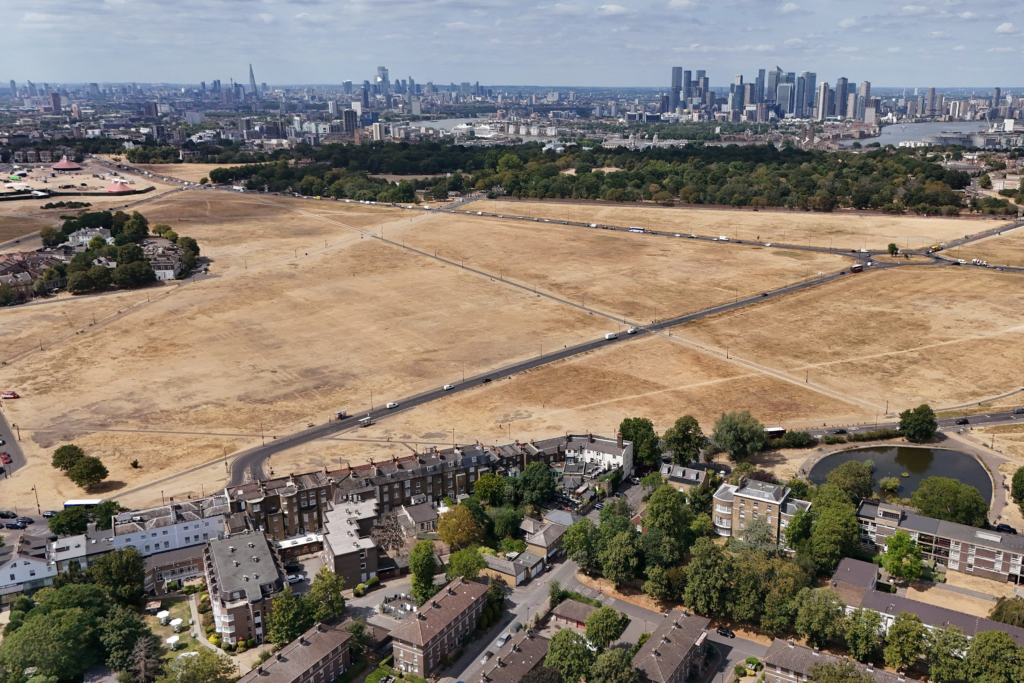
England has received a mere 7 per cent of its anticipated rainfall this month, with southern England experiencing an even more drastic 1 per cent, which is likely to mean this month will go down as the driest July ever.
Environment chiefs say much of the country is experiencing a “flash” drought – one that has come on quickly despite a very wet winter, as a result of dry weather in the spring and summer and a series of heatwaves that put pressure on resources.
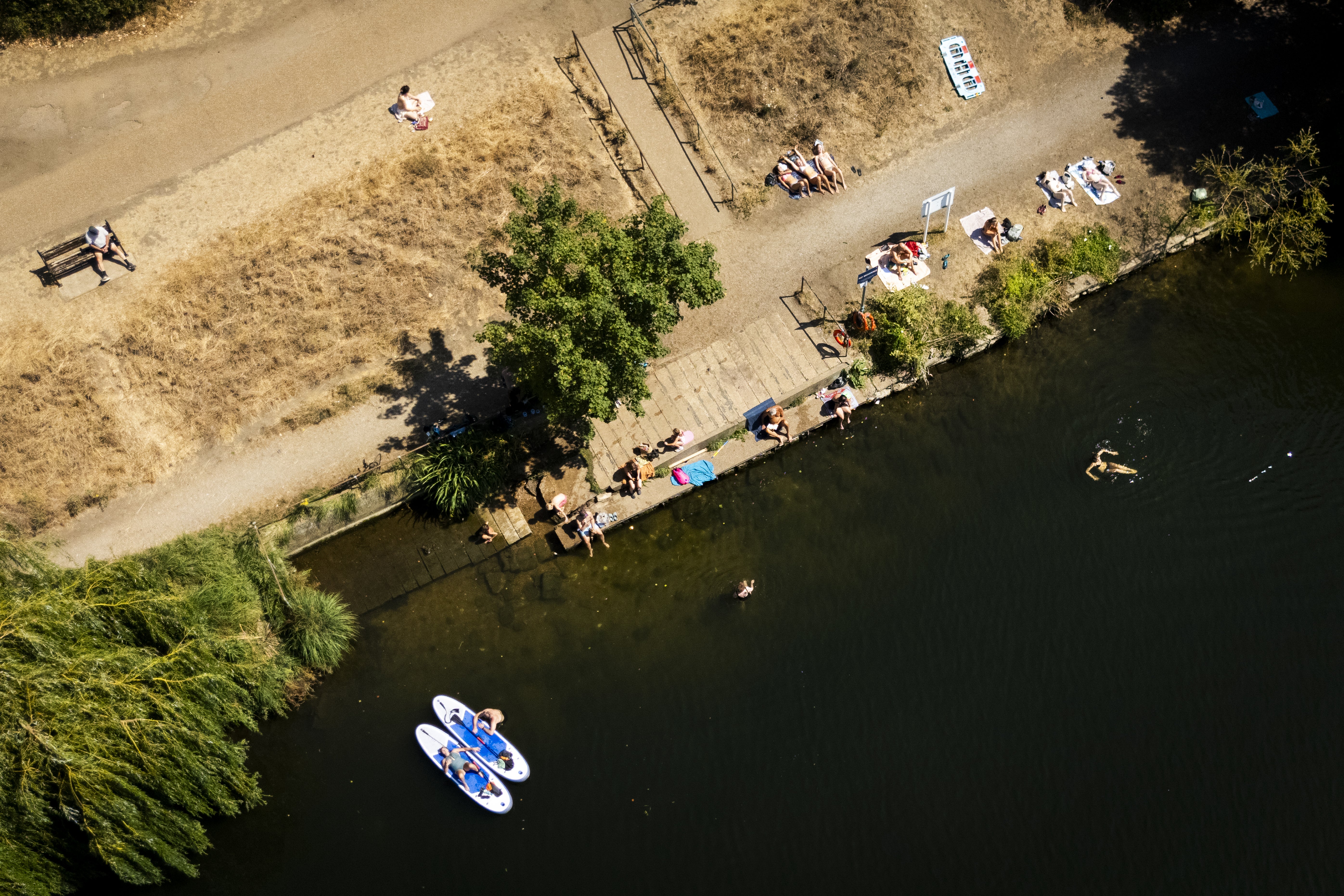
The announcement was made as parts of the UK experience their fourth heatwave of the summer, with temperatures reaching into the 30s in some places.
There were record-breaking heatwaves in May and June, and a third earlier this month, which have hit agriculture, rivers and the natural environment, prompted widespread wildfires and led to hosepipe bans for millions of people.
No rain is forecast until Monday next week – and even then the amounts are forecast to be modest. The Met Office says showers are set to move in from the southwest on Sunday night, then spread across most of England by the following morning.
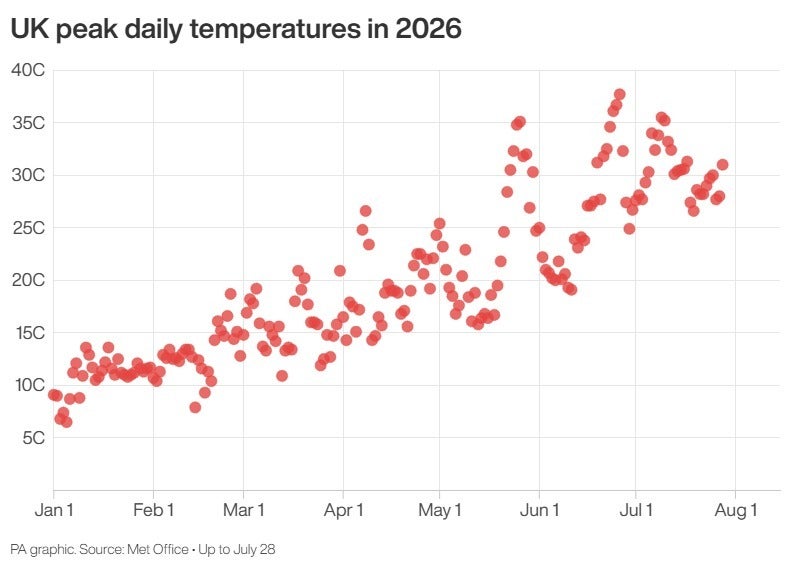
The Met Office also announced that a new June temperature record of 38C has been confirmed, up from the 37.7C provisionally announced.
The UK and England record, set on June 26, came from the same station – Lingwood in Norfolk – as the provisional reading, the Met Office said.
Almost a third of England – including parts of the South East, Midlands and North West – is in “prolonged dry weather” status, with only the North East and Yorkshire still seeing “normal” conditions for the time of year.
It is the second year in a row with parts of the country suffering from drought, despite winter rainfall replenishing reservoirs and groundwater and helping the country through a dry spring without major impacts, the Environment Agency said.
There have been three droughts in the past five years, in 2022, 2025 and 2026.
Helen Wakeham, director of water at the Environment Agency and chairwoman of the National Drought Group, said: “The hot and dry weather means we are currently using water faster than nature can replenish it.
“A second consecutive summer drought is an exceptionally serious situation and one that will have long-lasting impacts on our environment, wildlife and the economy.
“We want everyone to stay safe and hydrated during the hot weather but every drop we can save is a drop more for nature and agriculture.”
Water minister Emma Hardy said: “Our climate is changing, droughts are becoming increasingly common, and we need to be prepared for this new normal.
“We’re delivering long-term change in the water industry and driving record investments in infrastructure, including nine new reservoirs.
“We expect water companies to follow their drought plans, to go further and faster to reduce leaks, and to ensure supplies are not disrupted even in the driest of weather.”
The UK is increasingly suffering from extreme weather such as droughts and severe heatwaves fuelled by human-caused climate change, mostly as a result of burning fossil fuels.
Some locations in eastern England are expected to reach 35C on Wednesday, the seventh day in 2026 when temperatures have hit 35C or higher.
Before this year, the record number of days of 35C or above was five, set in the heatwave and drought summer of 1976.
The heat is set to ease off later in the week, with some rain in the forecast.
But, Mark Sidaway, deputy chief forecaster at the Met Office said: “It looks as though amounts of rain for many will be fairly modest, and won’t balance out the shortfall that we have recorded this summer.
“It’s still possible that some areas of the south will miss out and see little or no rainfall.”
Wildfire conditions are also set to remain elevated, with fire chiefs warning people to take “simple precautions” to avoid starting fires, such as avoiding disposable barbecues and disposing of cigarettes safely.
The harvest has come early, with some crops such as cereals experiencing poorer yields, livestock farmers are using winter feed for livestock as a result of poor grass growth, and even those with on-farm reservoirs are likely to run out of supply during August in areas in drought.
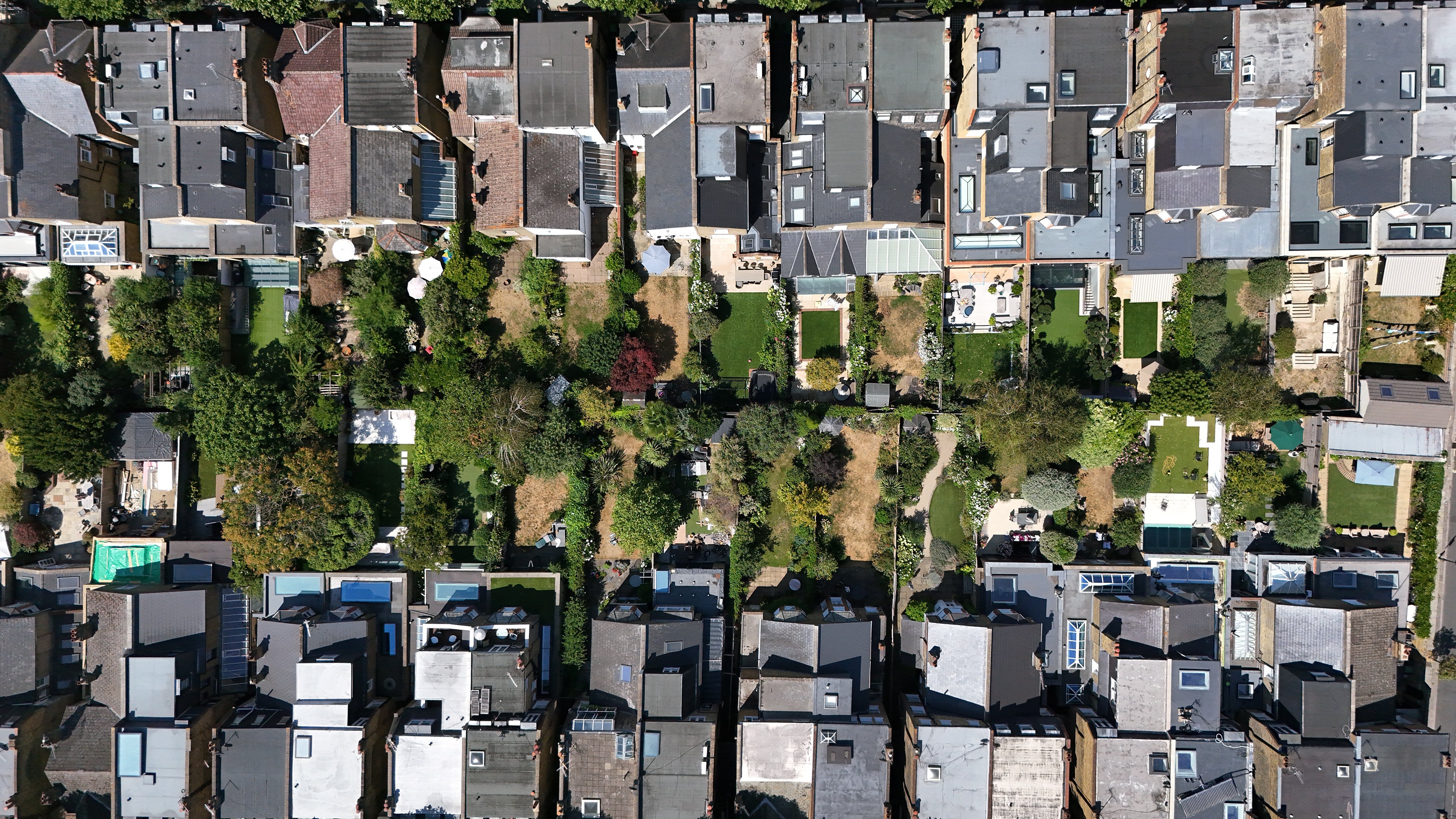
Tom Lancaster, land, food and farming analyst at the Energy and Climate Intelligence Unit (ECIU), warned that the kind of “weather whiplash” seen in the past two years was making farming incredibly precarious.
He said: “Climate change is now taking us into uncharted territory, with two consecutive summers of drought hammering farmers, wildlife and our public water supplies.
“With one of the wettest winters on record in between, the predictions of warmer, wetter winters and hotter drier summers for the UK that climate scientists have long warned us about is now a reality.”
And National Farmers’ Union (NFU) deputy president Paul Tompkins said: “Farmers and growers have always had to contend with the weather, but what they are experiencing now is climate change in action.
Also Read : Orban Loss in Hungary Is a Big Moment for the E.U. Here’s Why.
