
By using this site, you agree to the Privacy Policy and Terms of Use.
Accept
EU News And UpdatesEU News And UpdatesEU News And Updates
Notification Show More
Font ResizerAa
  • Latest
  • Business
  • Sports
  • Technology
  • Entertainment
  • Travel
Reading: Could AI transform mental health research? New study tests whether LLMs can simulate human emotions
Share
Font ResizerAa
EU News And UpdatesEU News And Updates
  • Latest
  • Business
  • Sports
  • Technology
  • Entertainment
  • Travel
Search
  • Latest
  • Business
  • Sports
  • Technology
  • Entertainment
  • Travel
Have an existing account? Sign In
Follow US
Home » Blog » Could AI transform mental health research? New study tests whether LLMs can simulate human emotions
A close-up shot of a dark room with a computer monitor displaying complex glowing neural network diagrams and semantic text matrices.
News

Could AI transform mental health research? New study tests whether LLMs can simulate human emotions

Oliver Bennett
Last updated: June 12, 2026 7:37 am
Oliver Bennett
Published: June 12, 2026
Share
SHARE

Mental health conditions are increasing worldwide and are expected to affect 1.2 billion people by 2050. In this scenario, scientists and researchers are trying to better understand them, work to prevent them and develop new treatment tools.

Unlike medication-based treatments, talk therapies targeting mental health conditions are harder to develop, as neither human trials nor animal models can fully replicate the complexity of the conditions being studied — raising both practical and ethical obstacles in the process.

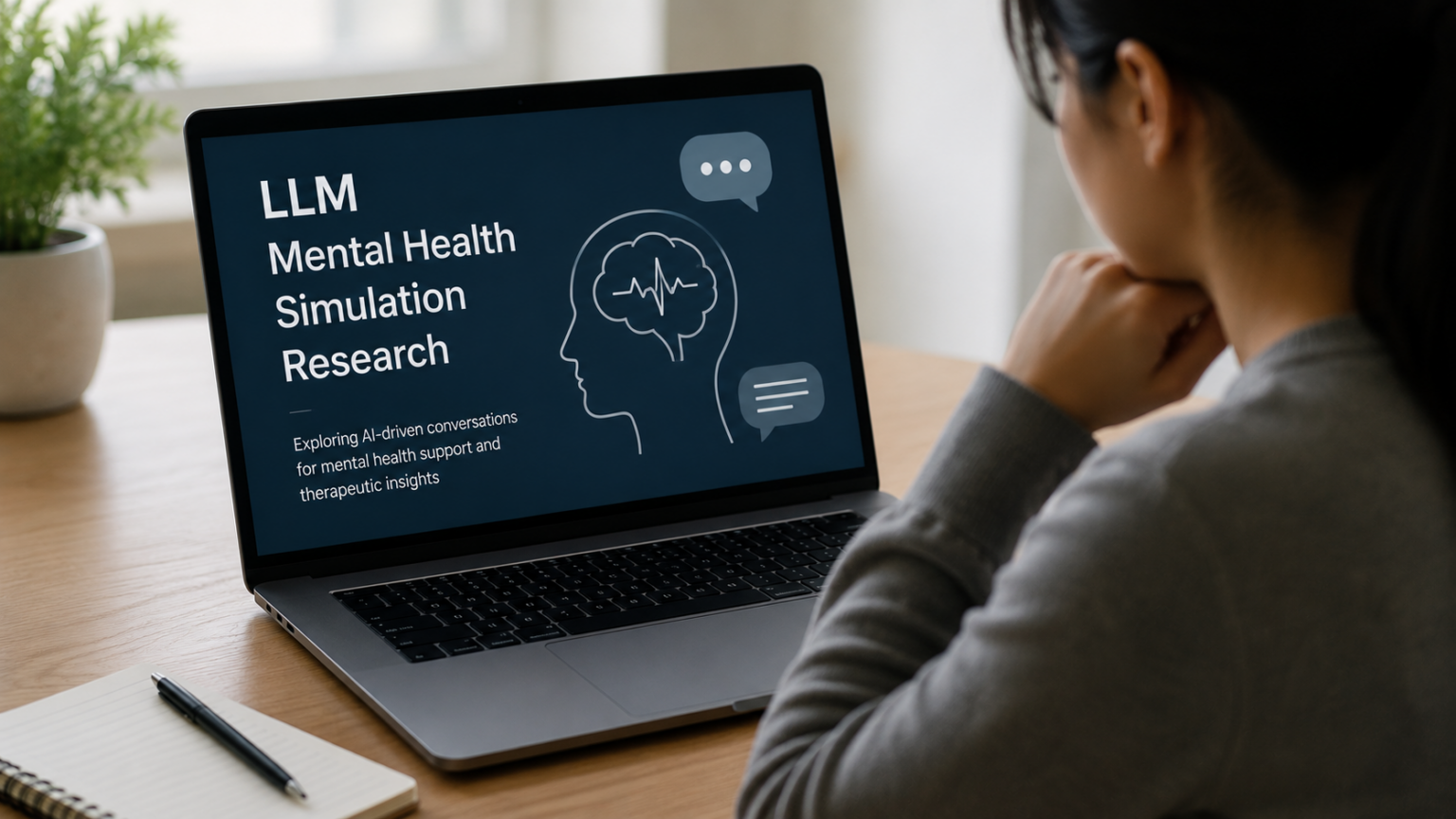
Now, a research team at Dresden University of Technology in Germany conducted a study to explore whether large language models (LLMs) can be used as tools for modelling mental health disorders in humans.
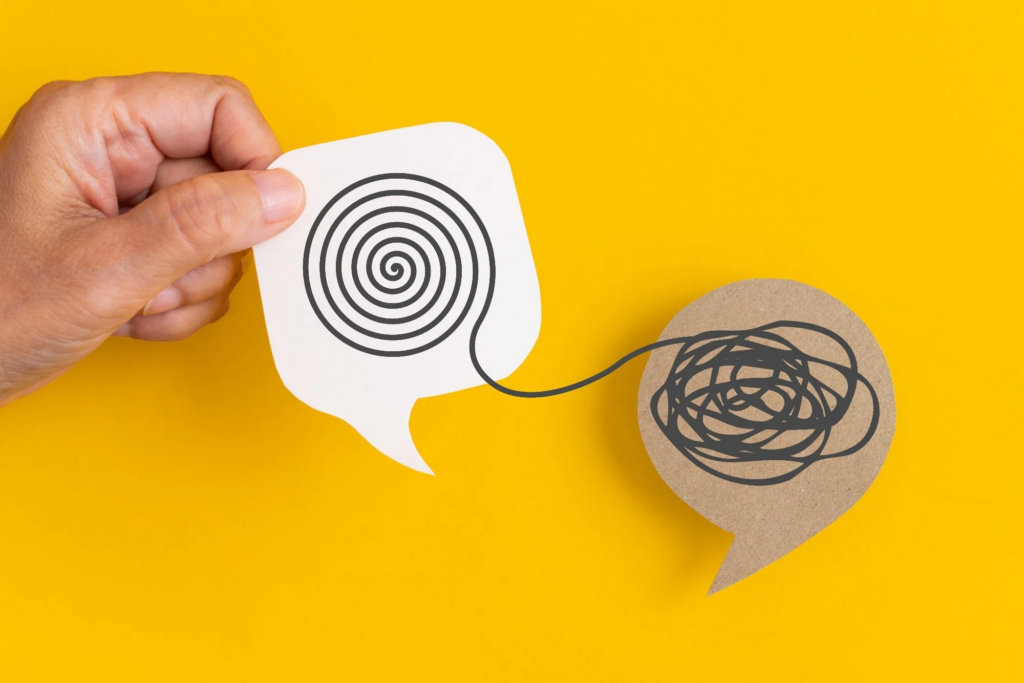
“Our results show that large language models can reproduce patterns of human affective and cognitive processes under controlled conditions,” said Dr Magdalena Wekenborg, head of the PsychoDigital Research group at TU Dresden.

“We can use these models as tools to better understand underlying mechanisms and to explore new approaches — for example in talk-based psychotherapy.”

Related

  • Clinicians are embracing AI faster than hospitals can handle, report finds

Can LLMs replicate human emotions?

Although some mental health conditions have been modelled in mice and other organisms, the researchers noted that these approaches fall short of capturing the complexity and subjectivity of human behaviour.

They added that LLMs have emerged as powerful computational systems that approximate aspects of human intellectual performance.

“In many unexpected areas, such as persuasion, emotional understanding, and reasoning, these models are on par with human capabilities,” the authors wrote.

In their study, the research team prompted LLMs to mimic fear, anxiety, anger, disgust, sadness, worry and stress, and using them as experimental models to study aspects of mental disorders.

Then, they tested if once the LLMs reached those states, they could be reversed through different regulation strategies.

Finally, they assessed whether inducing a certain emotion in an AI model would cause it to make the same kinds of mistakes that humans do when feeling the same emotion.

They found that while the models do not have mental states in the way humans do, they can still mimic some ways of thinking through how they process language.

This makes it possible to run certain experimental tests on them that would be impossible or unethical to conduct in humans or animals.

According to Jakob N. Kather, from TU Dresden, one advantage of experiments with LLMs is that they can be repeated in identical conditions as often as needed, with the ability to systematically vary them.

“This enables new, data-driven experiments in psychological and biomedical research that were previously not possible,” he said

Also Read : Cawl: our traditional Welsh recipe

End of an Era: UK Car Park Giant NCP Collapses Into Administration
Pope decries rise of AI-directed warfare, saying it leads to a spiral of annihilation
EU to ban Brazilian meat imports from September
UK to summon Chinese ambassador after convictions over spying on Hong Kong dissidents
Jewellery, watches and cash in golf bags seized in Zapatero case in Spain
TAGGED:Biomedical ModelingClinical Data StrategyComputational PsychiatryEuronews HealthGenerative AI 2026LLM ResearchMental Health TechTU Dresden
Share This Article
Facebook Email Print

Follow US

Find US on Social Medias
Popular News
Michelle Yeoh wearing a black evening gown smiling at the 31st annual Screen Actors Guild Awards.
News

Sean Baker & Michelle Yeoh to Premiere Short Film ‘Sandiwara’ at Berlin Film Festival

Oliver Bennett
Oliver Bennett
February 6, 2026
UK to summon Chinese ambassador after convictions over spying on Hong Kong dissidents
Viral Moroccan Chicken Tagine Recipe (Slow Cooked, Spiced and Deeply Satisfying)
Romania’s pro-EU coalition collapses after prime minister fails no-confidence vote
Viral Latvian Rye Bread Recipe (Dense, Dark and Incredibly Satisfying Homemade Loaf)

About US

Our website delivers fast, reliable, and comprehensive updates from across the European Union. From politics and economy to technology, culture, lifestyle, and policy changes, we cover every major development that shapes the EU.
Quick Link
  • About Us
  • Contact Us
  • Privacy Policy
  • Terms and Conditions
  • Cookie Policy
  • Disclaimer
  • Sitemaps
Top Categories
  • Technology
  • Business
  • Sports
  • News
  • Travel
  • Entertainment

Subscribe US

 Managed By WebProxima Web Agency

© EUFeeds 2026. All Rights Reserved.
Welcome Back!

Sign in to your account

Username or Email Address
Password

Lost your password?