
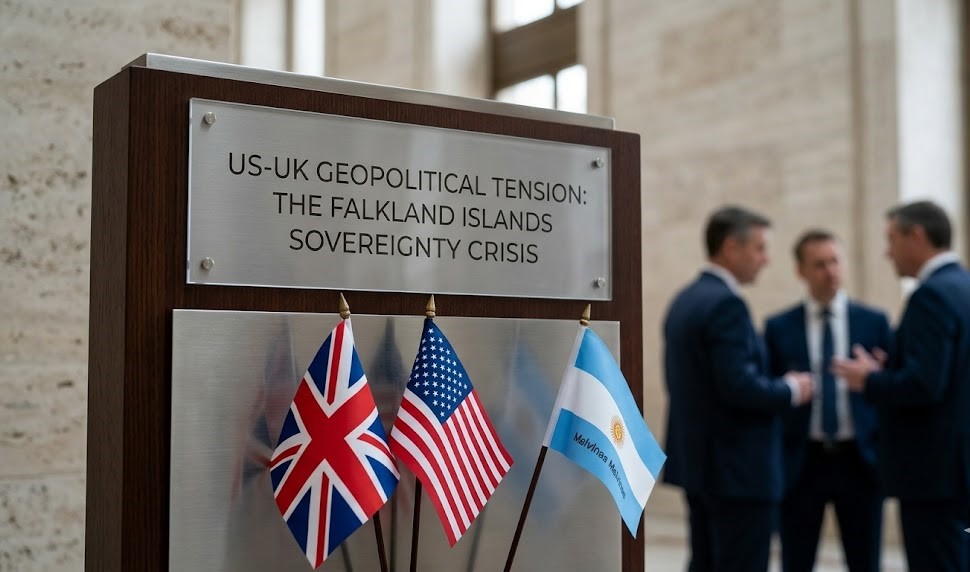

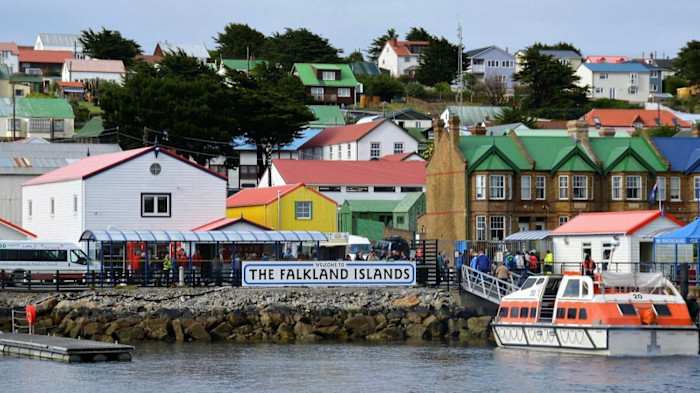
In the current global landscape of 2026, the historic “special relationship” between the United States and the United Kingdom faces its most severe structural strain since the Suez Crisis. Following the escalation of the US-Iran conflict, the Trump administration has signaled a profound shift in diplomatic alignment, moving to punish European allies that have withheld military assistance or overflight rights. Central to this retaliatory framework is a proposed reassessment of US support for British sovereignty over the Falkland Islands, an overseas territory that remains a high-resolution pressure point for UK national identity and South Atlantic security.
Technical Mechanics: Geopolitical Leverage and Policy Reassessment
The shift in US policy originates from a leaked internal Pentagon memo detailing punitive measures against NATO allies perceived as obstructionist in the ongoing Middle Eastern theater.
- The Imperial Possessions Protocol: The memo suggests that the US should cease its tradition of supporting European “imperial possessions” as a method of puncturing what the administration describes as a European “sense of entitlement.” This includes shifting from a position of neutrality/de facto recognition to a proactive call for decolonization and negotiations with claimant nations.
- NATO Suspension Mechanics: The administration is exploring the suspension of specific allies, such as Spain, from NATO operations due to the refusal of basing and overflight access. This sets a precedent where traditional alliance protections are no longer guaranteed but are instead contingent on active participation in US-led kinetic operations.
- Diplomatic Signaling: US officials have intensified rhetoric against UK Prime Minister Keir Starmer, utilizing labels like “coward” and “no Churchill” to signal a lack of confidence in British leadership and justifying the withdrawal of historical diplomatic shields at the United Nations.
Economic Impact and Procurement Logistics
While the Falklands dispute is primarily territorial, the withdrawal of US diplomatic support represents a massive blow to the UK’s strategic and economic “procurement” of global security.
- UN Resolution Isolation: Historically, the US has helped block or dilute UN Decolonization Committee resolutions favoring Argentina. A pivot to US support for Argentina’s claim—or even a vocal demand for negotiations—would isolate the UK internationally and embolden President Javier Milei’s administration to reassert control over South Atlantic maritime resources.
- Logistical Defense Costs: If US signals encourage Argentinian re-militarization of the claim, the UK would be forced to significantly increase its military procurement and deployment costs for the South Atlantic, potentially straining a domestic budget already impacted by the economic ripples of the Iran conflict.
- Trade Deal Leverage: The Trump administration has explicitly tied the status of future US-UK trade agreements to the level of military cooperation provided by London, using the Falklands as a primary bargaining chip in broader economic negotiations.
Structural Vulnerabilities and Strategic Limitations
Despite the aggressive posturing from the White House, several structural “firewalls” may prevent the total abandonment of the British claim.
- The Royal State Visit: King Charles III is scheduled for a high-stakes state visit to Washington next week. Historical rapport between the US President and the British Monarchy often serves as a stabilization mechanism for bilateral relations, potentially “fixing” the current diplomatic rift.
- Deep Security Integration: The intelligence and defense ties between the Pentagon and the UK Ministry of Defence are deeply embedded. Internal resistance from the US defense establishment is likely, as the Falklands remain a critical logistical node for Western influence in the South Atlantic and Antarctica.
- The Milei-Trump Rapport: While Trump and Milei are close ideological allies, the US administration may view the Falklands purely as a leverage point against Starmer rather than a long-term commitment to Argentinian sovereignty, leading to a “transactional” rather than “ideological” policy shift.

Conclusion
The strategic verdict for late April 2026 is that the Falkland Islands have been successfully weaponized as a tool of US coercive diplomacy. By threatening to withdraw long-standing support for UK sovereignty, the Trump administration has forced the Starmer government into a defensive posture, exposing the fragility of British overseas territories in a post-neutral US foreign policy. While a total pivot toward Argentina remains unlikely due to deep-seated security ties and the upcoming royal visit, the mere suggestion of a “sovereignty review” has effectively diminished the UK’s global diplomatic leverage and signaled the end of unconditional US-UK alignment.
Also Read : Bad Bunny Turns Super Bowl LX into a Puerto Rican Party
