
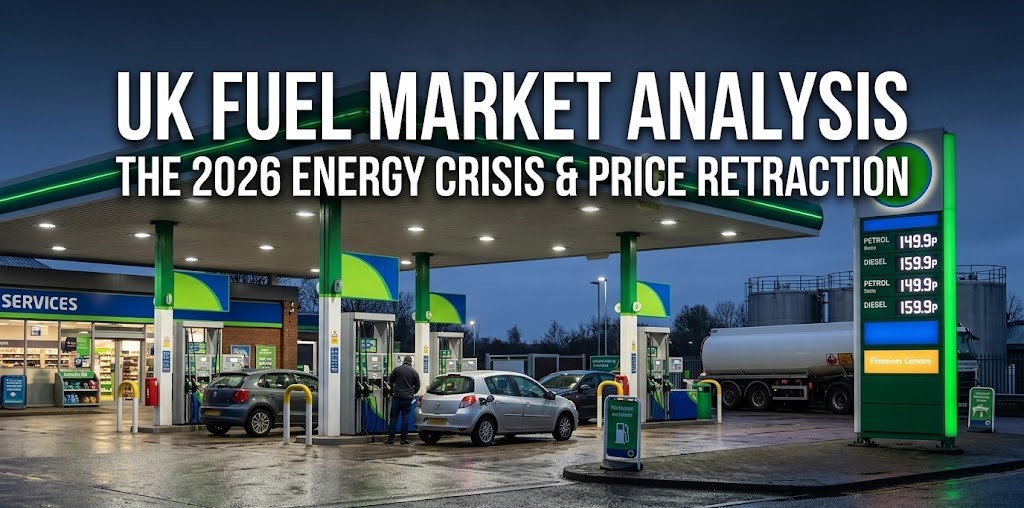

The United Kingdom is currently navigating a period of extreme volatility in the Energy industry, driven by geopolitical instability in the Middle East. On April 17, 2026, the RAC confirmed that petrol and diesel prices have fallen for the first time in six weeks. This marginal reprieve follows 43 consecutive days of increases triggered by the US-Israel war with Iran, a conflict that has fundamentally disrupted the global supply of Crude oil. While the decline is statistically small, it signals a potential easing of the inflationary pressures that have gripped the UK economy since February.
1. Historical Context: The 43-Day Price Surge
The current fuel crisis is rooted in the sudden escalation of hostilities in the Gulf region in early 2026. Before the conflict, Brent crude was trading at a stable $70 per barrel, with UK pump prices averaging 133p for petrol and 142p for diesel. However, as the conflict intensified, prices underwent an aggressive “rocket” phase. Over the last six weeks, diesel prices surged by approximately 50p per litre, nearly reaching the record highs of 2022. This rapid inflation was not merely a result of market speculation but was tied to the physical blockage of the Strait of Hormuz, through which approximately 20% of the world’s petroleum liquid consumption passes daily.
2. Geopolitical Mechanics: The Strait of Hormuz Blockage
The primary driver of the 2026 price spike was the effective closure of the Strait of Hormuz, the world’s most sensitive oil transit chokepoint.
- Supply Disruption: The narrow maritime corridor connects the Persian Gulf to the Arabian Sea. During the six-week peak of the war, commercial shipments were almost entirely halted, trapping millions of barrels of crude oil.
- The $100 Barrier: This physical scarcity pushed Brent Crude above the $100 psychological threshold in mid-March, eventually peaking at $119 per barrel.
- The Ceasefire Impact: The recent decline in UK pump prices is a direct correlation to a temporary ceasefire announcement. Iran’s statement that the Strait is now “open” for commercial vessels has caused Brent crude to plunge by nearly 10% in a single day, retreating back below the $100 mark.
3. Economic Impact: Cost of Living and Real Wage Decline
The surge in fuel costs has become a primary driver of the 2026 cost-of-living crisis. Data from the Office for National Statistics (ONS) reveals a stark shift in public anxiety: by March 2026, 75% of UK adults cited fuel prices as a top reason for increased living costs, up from just 38% in February.
- The Buffer Gap: Low-income and insecure workers are particularly vulnerable, as nominal wage growth in the private sector has stalled.
- The “Paltry” Real Wage: Analysts from Lancaster University suggest that the lack of a financial buffer means that even a 0.6p reduction is significant for household budgeting, though a full tank of diesel remains roughly £26 more expensive than it was in late February.
4. Industry Dynamics: The Wholesale vs. Retail Lag
There is a documented mechanical delay between wholesale market shifts and retail price reductions, often referred to as “feather and rocket” pricing.
- The 7p Rule: Motoring groups like the RAC and AA note that every $10 movement in the price of crude oil generally prompts a 7p change at the pump.
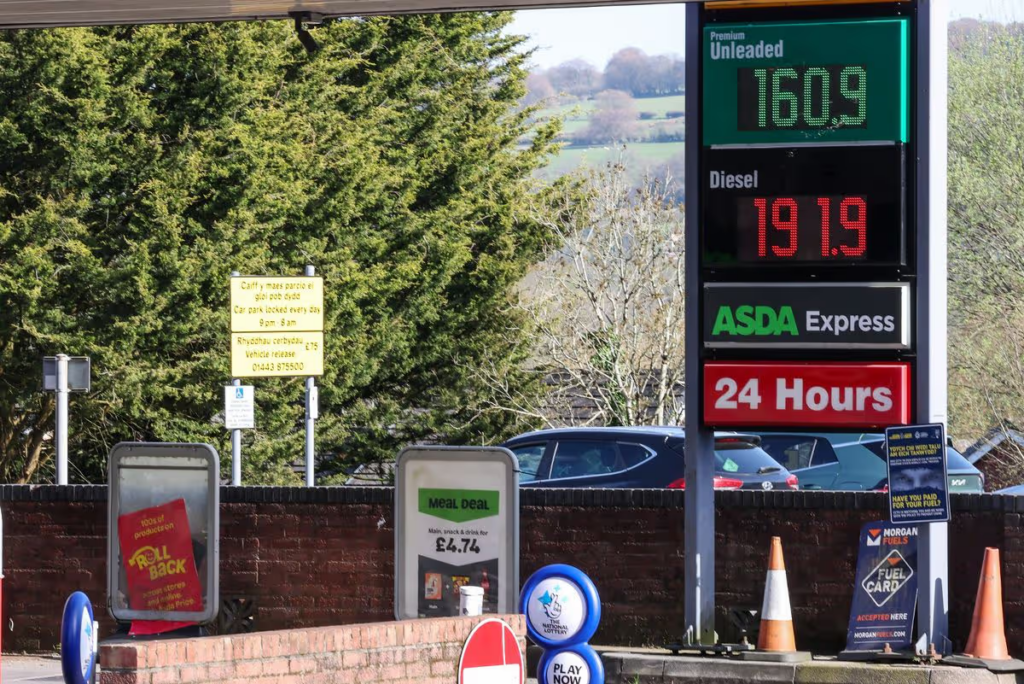
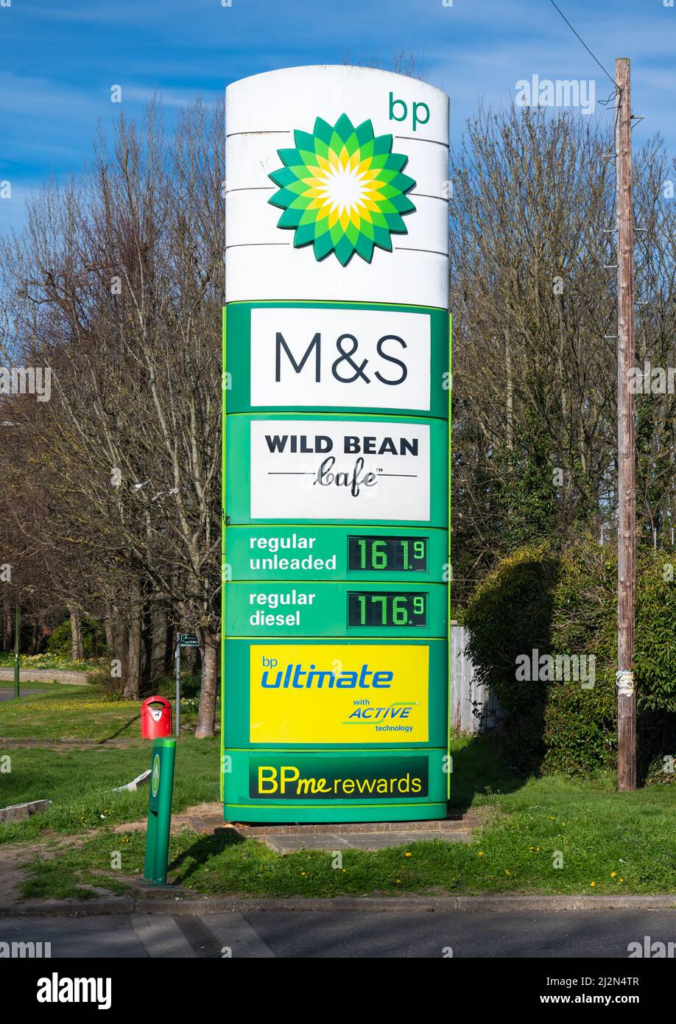
- Current Benchmarks: As of mid-April, diesel sits just below 191p per litre, while petrol is just under 158p.
- Predictive Relief: Because wholesale costs have stayed below recent peaks for several days, the RAC is forecasting further reductions of “several pence” in the coming week, provided the ceasefire holds and maritime security is maintained in the Gulf.
5. Sociocultural Impact: The Strain on Secondary Industries
The fuel crisis in 2026 is cascading through secondary sectors, notably the food and fishing industries.
- The Fishing Crisis: Diesel costs for UK fishermen have doubled in six weeks, forcing many fleets to remain in port as the cost of fuel exceeds the projected value of the catch.
- Food Inflation: Family-run businesses, such as fish and chip shops, are reporting price hikes of up to 20% to survive. This “agflation” (agricultural inflation) is compounded by the rising cost of heating oil, which many rural households rely on for daily survival.
6. Technical Specifications: Jet Fuel and Global Reserves
The impact of the Hormuz closure extends beyond road transport to global aviation.
- Jet Fuel Scarcity: The International Energy Agency (IEA) issued a critical warning in early April that Europe had “maybe six weeks of jet fuel left” in strategic reserves if the Middle Eastern blockade continued.
- Supply Chain Fragility: The reliance on the Gulf for refined petroleum products highlights the fragility of the European energy grid. In 2026, the movement toward Renewable energy has not yet reached the scale required to insulate the transport sector from these specific fossil-fuel-based “black swan” events.
7. Predictive Modeling: The Outlook for May-June 2026
Looking forward, the stability of UK fuel prices is entirely contingent on the durability of the current Middle East ceasefire.
- Optimistic Scenario: If the Strait of Hormuz remains open and commercial traffic returns to 100% capacity, Brent crude could settle back in the $80-$85 range by May, potentially bringing petrol prices down toward 145p-150p.
- Pessimistic Scenario: Any collapse of the ceasefire or a “Major refinery fire”—as recently feared in Australia—could immediately re-ignite the market. Analysts suggest that the volatility index (VIX) for energy in 2026 will remain at record highs as the world continues to navigate the geopolitical realignment caused by the US-Israel-Iran conflict.
Conclusion
The April 2026 downturn in petrol and diesel prices marks a fragile turning point in the UK’s latest energy emergency. While the immediate 0.3p to 0.6p decline is mathematically minor, it represents the first successful “de-escalation” of pump prices since the outbreak of the war in the Middle East. The effective weaponization of the Strait of Hormuz has demonstrated that the UK’s domestic stability remains tethered to global maritime security. As the ceasefire provides a window for oil prices to retreat below $100 per barrel, the burden now shifts to retailers to pass these wholesale savings on to a public currently facing record levels of economic anxiety. Ultimately, the 2026 fuel crisis serves as a stark reminder that until the transition to electric and renewable alternatives is complete, the UK’s real wages and cost of living will continue to be dictated by the volatile geopolitical currents of the Persian Gulf.
Also Read : Mexico’s Most Wanted Drug Lord ‘El Mencho’ Killed in Military Raid
