
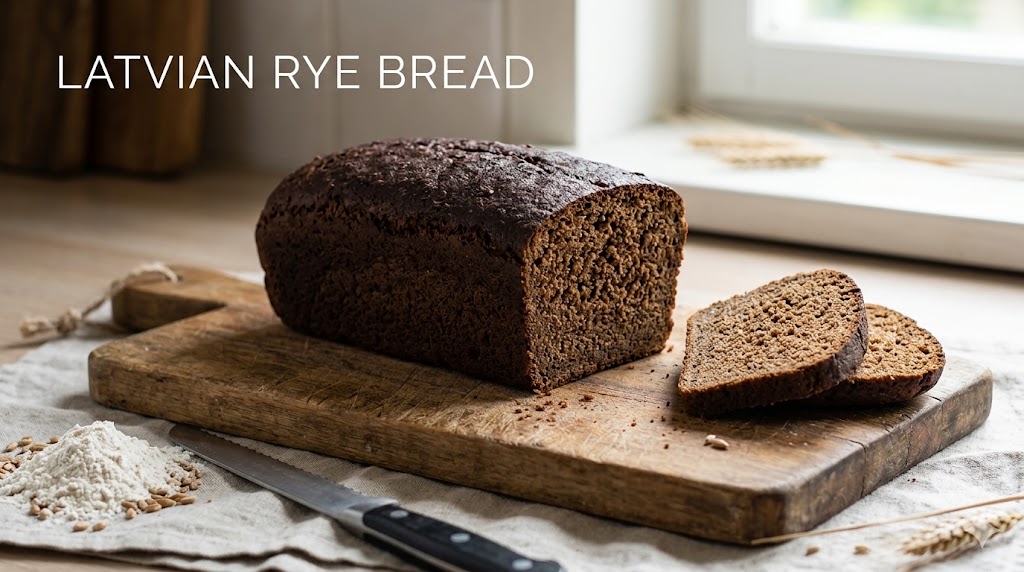

It is Thursday, April 2, 2026. If you want to understand the Baltic survival mechanism, you must look at their bread. Latvian Rupjmaize (dark rye bread) is not merely a vessel for butter or smoked fish; it is a dense, high-fiber energy matrix engineered by centuries of harsh winters and agricultural necessity. Today, we are breaking down the biology, the baker’s mathematics, and the thermochemistry that turns simple rye flour into this profoundly cultural staple.
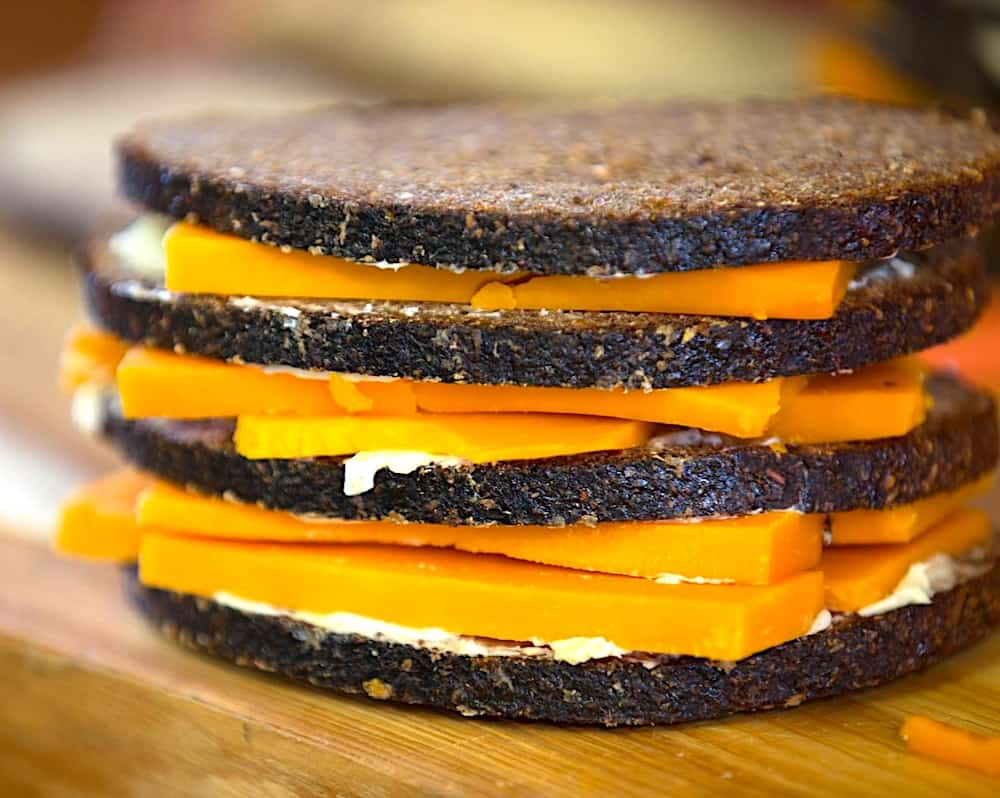
The Biology of Rye: Arabinoxylans vs. Gluten
Unlike traditional southern European wheat breads that rely on a highly elastic gluten network, Rupjmaize utilizes rye flour, which behaves entirely differently on a molecular level. Rye contains less glutenin and gliadin, meaning it cannot form the same stretchy, web-like structure.
Instead, the structural integrity of this dense bread relies on arabinoxylans, a type of highly water-absorbent dietary fiber. These pentosans bind massive amounts of water, creating a viscous gel that traps the carbon dioxide ($CO_2$) produced by the fermenting yeast. This biological mechanism is precisely what gives Rupjmaize its signature heavy, moist, and close-crumbed texture that keeps hunger at bay for hours.
The Thermodynamics and Baker’s Math
To achieve the perfect density, we must look at the specific hydration ratio of the dough. In standard baker’s percentages, the hydration ($HP$) is calculated by dividing the total mass of the water by the total mass of the flour.
Given the recipe parameters provided (400g coarse rye flour + 150g strong white bread flour = 550g total flour) and 300ml (or 300g) of water, we can model the structural hydration:
$$HP = \left( \frac{m_{water}}{m_{flour}} \right) \times 100$$
$$HP = \left( \frac{300}{550} \right) \times 100 \approx 54.55\%$$
A 54.5% hydration level is relatively low for breadmaking. This precise ratio prevents the heavy, gel-like rye dough from collapsing under its own physical weight during the extended fermentation phases.
The Recipe Protocol and Macronutrient Profile
Creating authentic Rupjmaize requires strict adherence to temperature and fermentation times. The deep, nearly black crust is the result of adding dark treacle (molasses) and baking at 200°C, which triggers an aggressive Maillard reaction—a form of non-enzymatic browning between amino acids and reducing sugars that creates hundreds of new, complex flavor compounds.
The Method:
- Activate: Combine 300ml warm water, 2 tbsp dark treacle, 1 tbsp brown sugar, and 7g dried yeast. Rest for 10 minutes to initiate fermentation.
- Combine: Mix 400g coarse rye flour, 150g strong white bread flour, 1 tsp salt, and 1 tbsp caraway seeds. Integrate the wet yeast mixture.
- Knead: Press and fold gently for 10 minutes on a floured surface to build structure without tearing the fragile rye matrix.
- First Fermentation: Cover and rest in a warm environment for 1 to 1.5 hours until slightly puffed.
- Shape & Second Fermentation: Punch down, shape into a smooth oval, place on a parchment-lined tray, and rest for 45 minutes.
- Bake: Brush the surface with melted butter. Bake at 200°C with a water dish in the bottom of the oven for steam. Bake for 35 to 40 minutes.
- Cool: Brush again with butter for a glossy finish and cool completely to allow the internal crumb to properly set.
| Macronutrient | Value per Serving | Clinical Significance |
| Calories | 587 kcal | High energy density designed for sustained physical labor. |
| Carbohydrates | 116g | Primarily complex starches for slow, steady glucose release. |
| Dietary Fiber | 14g | Exceptional gut-health support and delayed gastric emptying. |
| Protein | 16g | Aids in cellular repair and promotes long-lasting satiety. |
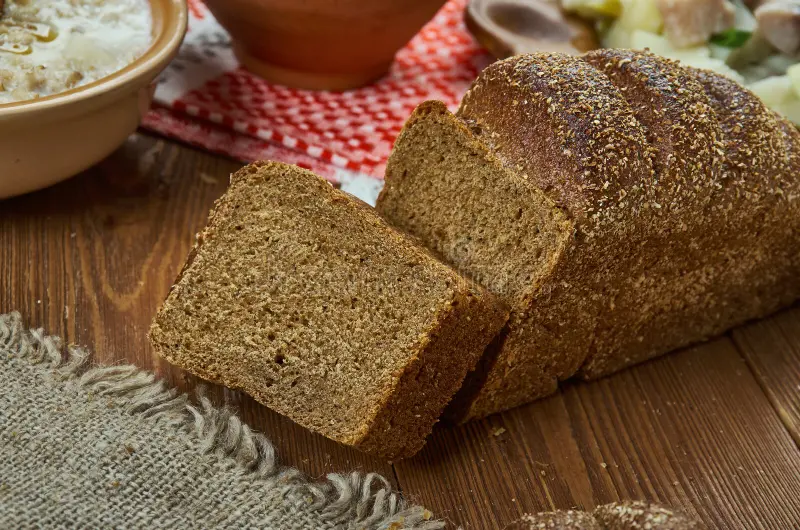
Preservation Mechanics: Starch Retrogradation
Rupjmaize is famous for remaining edible for up to a week without modern refrigeration, a vital trait in historical Latvian culinary history. This is not magic; it is polymer chemistry.
Bread goes stale primarily due to starch retrogradation, a process where the starch molecules (amylose and amylopectin) realign into rigid crystalline structures, forcing water out of the crumb. Because rye is so dense with water-binding arabinoxylans, the moisture is physically trapped within the matrix, severely delaying the retrogradation process. Storing the cooled loaf wrapped in a clean linen towel maintains the perfect humidity equilibrium.
Conclusion
Latvian Rupjmaize is a masterclass in agricultural adaptation and food science. By leveraging the unique biological properties of rye fiber, precise hydration mathematics, and the thermochemistry of the Maillard reaction, this bread transforms basic pantry staples into a historically resilient, nutritionally dense survival tool. When you bake this, you aren’t just making a side dish; you are engaging in centuries of Baltic scientific engineering.
Also Read : Soham Murderer Ian Huntley in Serious Condition After HMP Frankland Attack
