
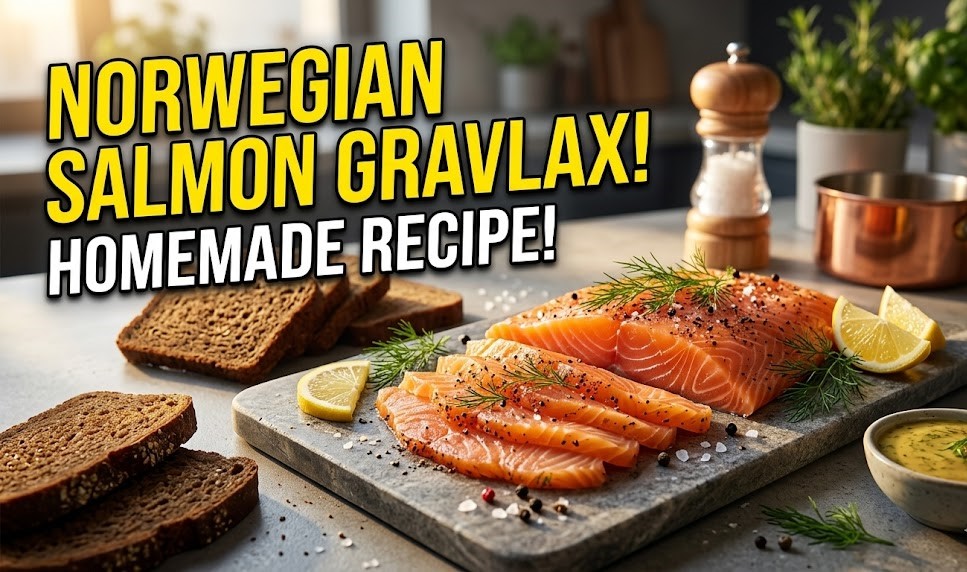

t’s March 2026, and while we’ve mastered air-frying everything from pasta to grapes, some traditions remain untouchable. Gravlax—literally translated as “Grave Salmon”—is the ultimate test of culinary patience. It’s essentially the “slow fashion” of the seafood world. You aren’t just cooking; you are performing osmotic dehydration, a fancy term for letting salt and sugar do the heavy lifting while you sit back and wait for the magic to happen.
If you’ve ever felt like your kitchen was missing a touch of Viking-era sophistication, this is it. It’s elegant, it’s expensive-looking, and it’s surprisingly easy—as long as you don’t mind sharing your fridge with a weighted fish for a few days.
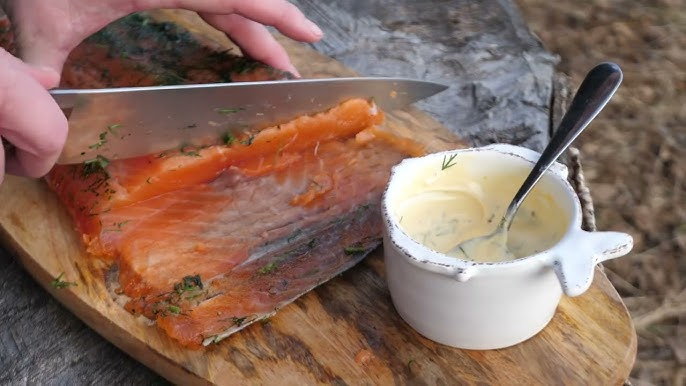
01. The 2026 Sustainability Pulse: Why Norway?
In early 2026, the Norwegian Seafood Council (NSC) Forecast reported that Norwegian salmon remains the global benchmark for sustainable aquaculture. Thanks to the “Traffic Light System” and over 90% of farms utilizing automated ecosystem monitoring, you can feel ethically sound about your appetizer.
According to the 2026 UK Market & Retail Trends Report, these fish are raised in the ice-cold runoff of fjords, which creates the high fat content necessary for a buttery, translucent gravlax. This fat isn’t just flavor; it’s a structural necessity for the curing process.
02. The Science of the Cure: Ratios & Physics
Curing is not just seasoning; it’s a chemical transformation. To achieve the perfect texture, culinary scientists in 2026 suggest a specific weight-to-salt ratio. For a Medium Cure (the sweet spot for most palates), use the following formula:
$$Cure_{Total} = \text{Salmon Weight} \times 0.50$$
$$\text{Salt} : \text{Sugar} = 1:1$$
Critical Safety Note: According to the 2026 Marine Stewardship Council (MSC) Salmon Report, your salmon must reach a water activity level ($a_w$) of $\le 0.92$ to inhibit pathogens like Listeria. This is why the 48–72 hour dwell time is non-negotiable for safety.
03. 2026 Flavor Trends & Pairings
While the classic dill and mustard sauce is timeless, 2026 menus are getting adventurous. Finnair’s Spring/Summer 2026 Inflight Menu features gravlax seasoned with orange and anise, paired with blackcurrant gelée.
| Component | Classic Choice | 2026 “Offbeat” Choice |
| Acid | Lemon Zest | Yuzu or Kumquat |
| Herb | Fresh Dill | Fir Buds or Shiso |
| Alcohol | Vodka | Gin (Botanical-heavy) |
| Sweetener | White Sugar | Beetroot Juice (for color) |
04. Step-by-Step Refinement: The Professional Touch
- The “Sashimi” Rule: Always ensure your salmon is sashimi-grade or has been previously frozen to $-23^\circ\text{C}$ ($-10^\circ\text{F}$) for at least a week to eliminate parasites. Check the CDC Food Safety Standards for the latest 2026 biological safety protocols.
- Weight Matters: Don’t just lay the fish in the pan. Use 2–3kg (5–6lbs) of weights (canned beans work perfectly) to press the moisture out. This ensures the cure penetrates the dense center of the fillet.
- The Rinse vs. Scrape: Most modern chefs now recommend a quick rinse under cold water followed by a 1-hour uncovered “dry-off” in the fridge. This allows the salt to settle and creates a tacky surface (the pellicle) that holds the fresh dill better.
Conclusion
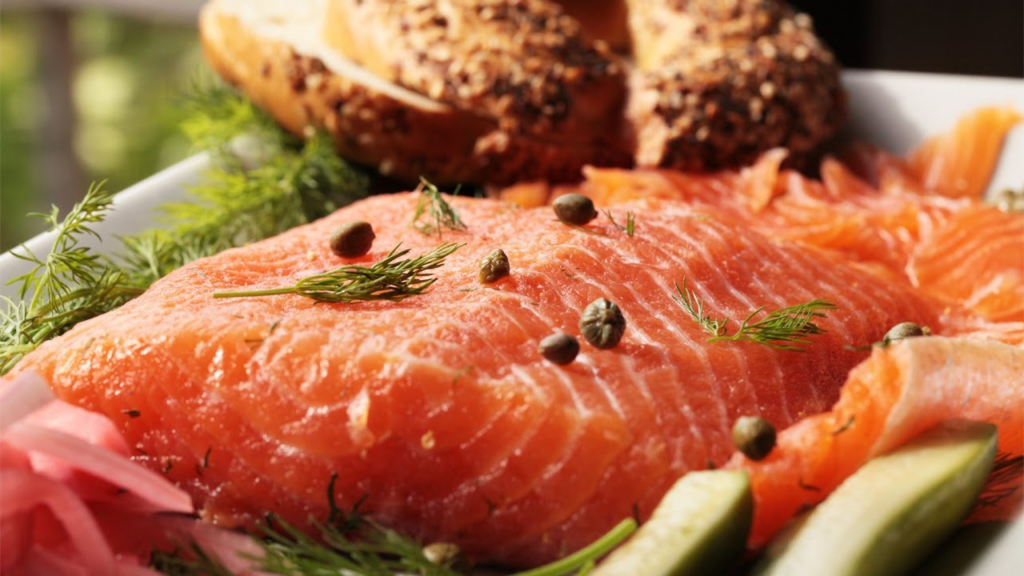
Mastering Norwegian Salmon Gravlax is a rite of passage for the home cook who values substance over speed. In an era where everything is “instant,” the 72-hour wait for a perfectly cured fillet is a quiet act of rebellion—and your taste buds will reap the rewards. Whether you serve it on a classic bagel or as a Michelin-inspired appetizer with blackcurrant gelée, you’re serving history on a plate. It’s sophisticated, sustainable, and undeniably cool.
Also Read : Milan-Cortina 2026: A Vibrant Opening Ceremony Across Four Locations
