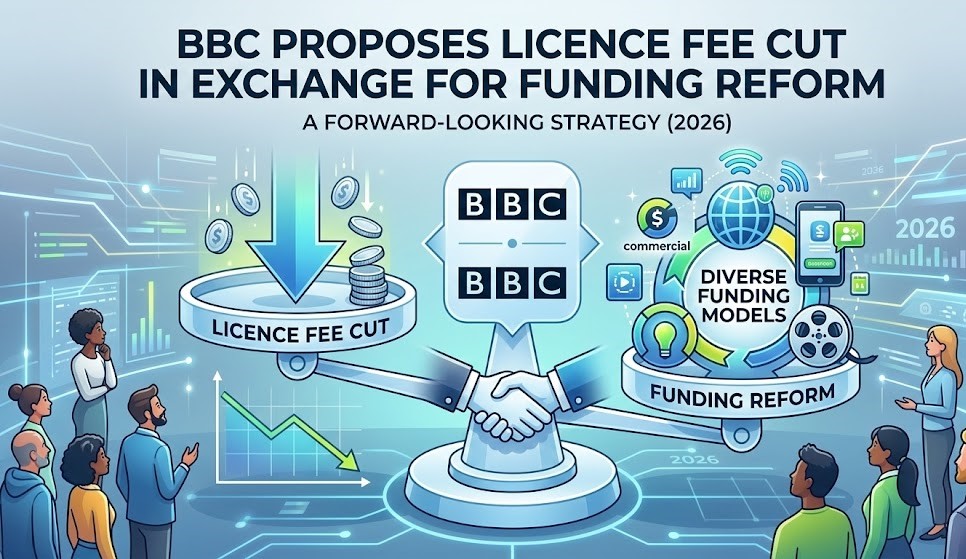
On March 5, 2026, the BBC suggested a landmark proposal: the cost of the annual TV licence fee could be cut if the government implements a new funding model that ensures a higher percentage of the population pays. The suggestion was part of the corporation’s formal response to a government Green Paper exploring the future of the broadcaster as its current Royal Charter approach expires.
The BBC argues that the current “status quo is not an option,” citing a significant decline in paying households despite massive monthly usage across the UK.
📊 The BBC Funding Crisis by the Numbers
Metric
Current Status
The Trend
Monthly Adult Usage
94%
Stable/High
Paying Households
80%
In significant decline
Funding Gap
£500m
Spending cuts required over 2 years
World Service Cost
£400m
BBC wants government to resume this bill
🔍 Key Reform Proposals
The BBC’s response outlines several “bold moves” to modernize the corporation and protect its independence:
Universal Payment Model: The BBC wants to move away from a fee tied strictly to “live television” consumption, which is increasingly outdated in the streaming era. They suggest that if a fairer, broader system is found, the individual cost per household could decrease.
Ending the 10-Year Charter: Currently, the BBC’s existence is debated every decade. The corporation is asking to be put on a permanent footing to remove the constant threat of closure and political maneuvering.
Advertising Collaboration: In a surprising move, the BBC suggested opening iPlayer and BBC Sounds to host advertising-funded programs from rivals like ITV and Channel 4 to help protect the wider British media ecosystem.
Independence from Government: Following recent controversies regarding “politically motivated coups” on the board, the BBC is demanding a new, transparent process for board appointments to remove the perception of political interference.
🎙️ Directorial Stance
“The choice here is clear: back the BBC or watch it decline… Clear decisions are needed to ensure the BBC is funded sustainably and fairly so it can continue to deliver.”