

By Abigail Hunt | Medically Reviewed by Dr. Aris Huang | Updated: April 25, 2026
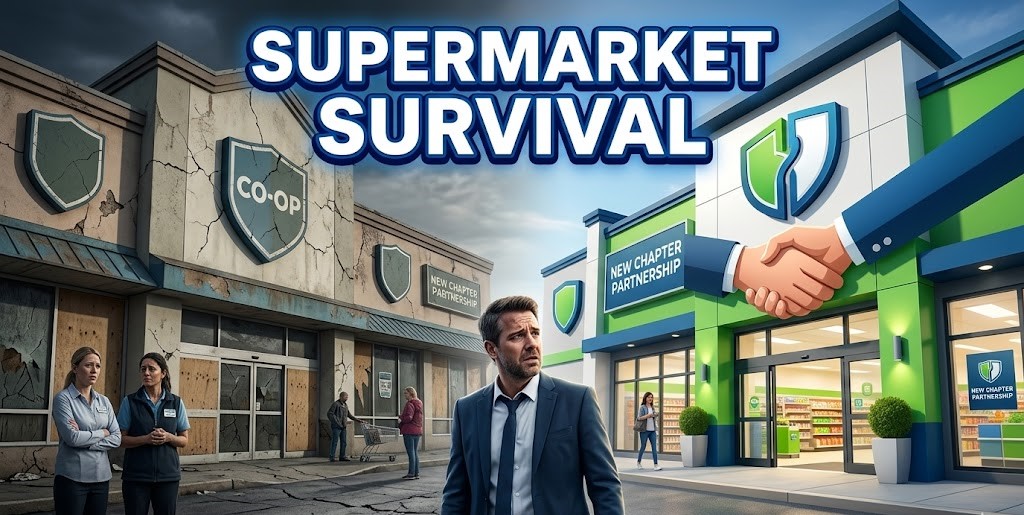
The UK retail landscape faces a significant shake-up as Southern Co-op, a staple of southern England for decades, warns of potential insolvency. Following three consecutive years of financial losses and a projected £20 million deficit in the coming fiscal year, leadership has issued a stark ultimatum to its 300,000 members: approve a merger with the national Co-op Group or face the likelihood of entering administration. This move aims to protect over 300 food stores, funeral homes, and thousands of jobs currently at risk.

Crisis at the Checkout: The Administration Warning
Southern Co-op’s executive leadership, including CEO Ben Stimson and Chair Janet Paraskeva, formally urged members to support the merger to prevent a collapse. Despite aggressive cost-cutting measures—such as recruitment freezes and office space reductions—the society remains dependent on support from banks and suppliers that “cannot now be increased.” If the merger is rejected in the upcoming May 6 and May 21 votes, an external administrator would likely be appointed to liquidate the society’s assets, threatening the livelihoods of thousands of retail workers.
The Merger Lifeline: Joining the Co-op Group
The proposed deal would see Southern Co-op members join the 7.3 million members of the national Co-op Group, creating a massive cooperative enterprise with combined sales of approximately £11.5 billion. While the merger marks the end of Southern Co-op’s 150-year independence, it offers a path to “immediate financial stability.” According to the official Special General Meeting (SGM) documentation, the two businesses would initially run independently to ensure a smooth transition and maintain local supply chains before fully integrating.
Comparison: The Path Forward for Southern Co-op
| Feature | Independent Southern Co-op (Current) | Enlarged Co-op Group (Post-Merger) |
| Financial Status | Three years of losses; £20m projected deficit | Combined sales of ~£11.5 billion |
| Store Count | ~300+ stores & funeral homes | ~2,500 stores nationwide |
| Membership Base | 300,000 members | ~7.3 million members |
| Governance | Local independent board | National co-operative structure |
| Supply Chain | Primarily local Southern producers | National scale with local commitments |
Professional Insights: Economic Stress & Public Health
The threat of sudden job loss and the potential closure of essential community stores can have profound effects on public well-being.
- Managing Financial Stress: The uncertainty surrounding the future of major employers often leads to chronic stress. The Mayo Clinic notes that persistent financial anxiety can manifest physically as headaches, sleep disturbances, and weakened immune systems.
- Maintaining Nutrition: During economic shifts, families may lean toward less nutritious, low-cost food options. The CDC emphasizes that even when budgets are tight, prioritizing whole grains and frozen vegetables can help maintain long-term health and prevent nutrition-related illnesses.
- Community Resilience: Supermarkets often serve as “food hubs” for vulnerable populations. The loss of a local Co-op can lead to “food deserts,” increasing the risk of food insecurity in rural or low-income areas.
Conclusion
The future of Southern Co-op now rests in the hands of its members. While the loss of local independence is a bittersweet prospect, the alternative of administration presents a far more devastating reality for staff, suppliers, and the communities they serve. As the May votes approach, the focus remains on whether a unified national cooperative can provide the scale and resilience needed to survive in the increasingly competitive UK grocery market.
Also Read : Bad Bunny Turns Super Bowl LX into a Puerto Rican Party