
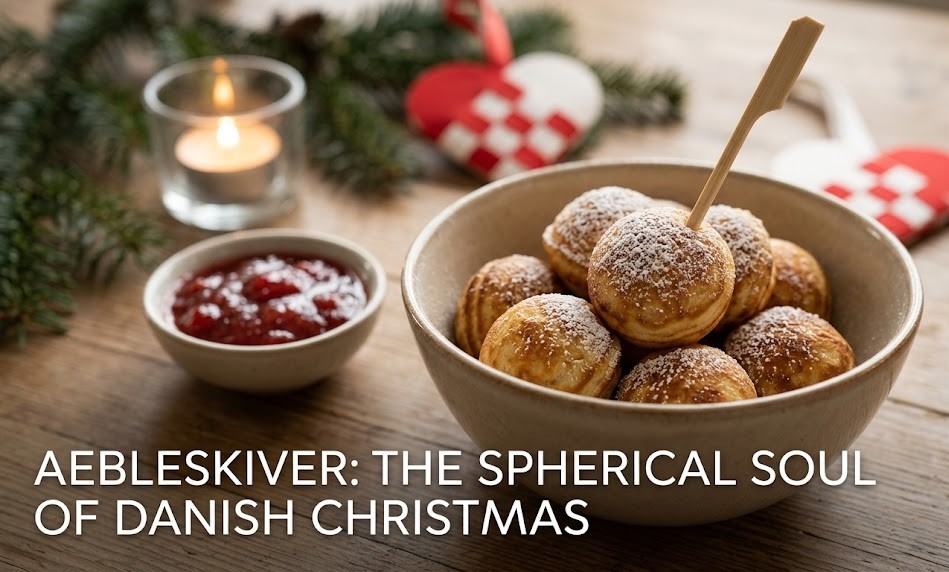

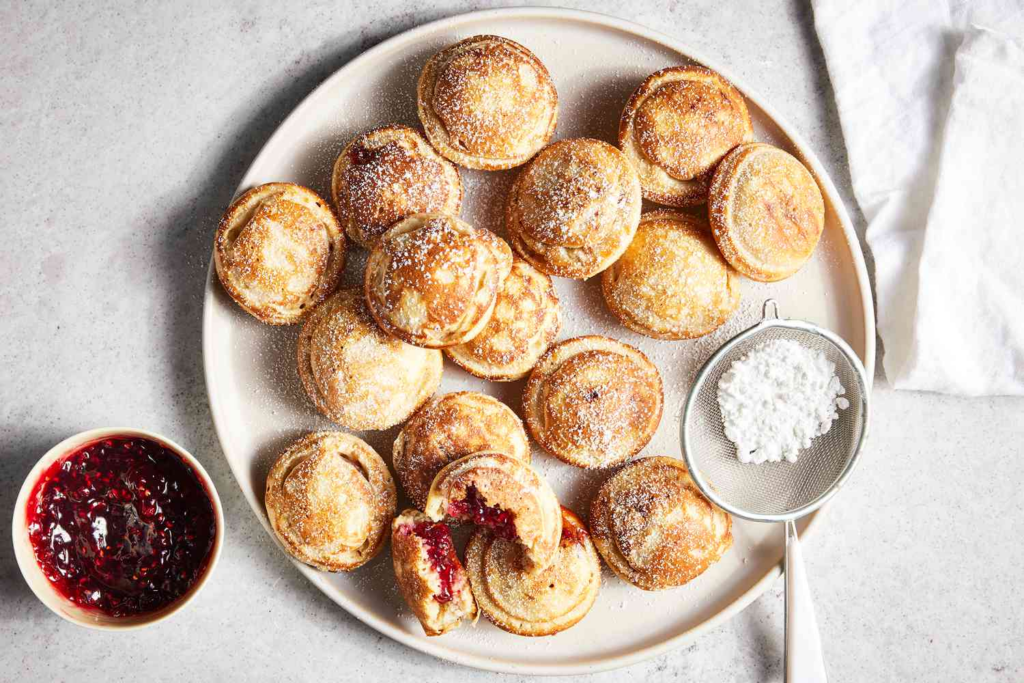
While we are technically entering the spring season, the craving for comfort food knows no calendar. Today we are looking at Aebleskiver (pronounced eb-ble-skee-ver), the iconic Danish pancake balls. Though the name literally translates to “apple slices,” modern versions are usually light, fluffy spheres of batter served with jam and powdered sugar.
These aren’t just snacks; they are a cornerstone of . In Denmark, the kitchen becomes a high-production zone every December, but as our Nordic friends have noted, these are far too good to be restricted to just one month of the year.
The Cultural and Demographic Blueprint
As of early 2026, the Danish diaspora remains a significant cultural force, particularly in North America. To understand the reach of this recipe, let’s look at the “concrete numbers” regarding the groups that preserve this tradition.
| Group / Demographic | Population / Statistic | Cultural Significance |
| Denmark Residents | ~6.02 Million | The originators; Aebleskiver are found in nearly every home in December. |
| Danish Americans | ~1.3 Million | A significant ethnic group in the US, primarily clustered in the Midwest and California. Check the for regional clusters. |
| Solvang, California | ~6,000 Residents | Known as the “Danish Capital of America.” shows ~72% of the population is White (Non-Hispanic), heavily reflecting Danish heritage. |
| Indian Connection | Colonial History | Denmark held territories in India (Tranquebar) for 225 years (1620–1845), likely leading to the cross-cultural evolution of similar dishes like . |
The Physics of the Pancake Ball
Creating the perfect Aebleskiver is an exercise in heat transfer and geometry. Unlike a flat pancake, the Aebleskiver is a sphere. If we assume a standard ball has a radius r of 2.5 cm, the volume V of batter you are cooking is:
V=34πr3≈65.45 cm3
The goal is to cook the exterior to a light-brown crust while ensuring the 65.45 cm3 of interior batter reaches a fluffy, non-liquid state. This is achieved through the “90-degree turn” method, which allows raw batter to flow into the crust and expand, creating a solid, airy center.
The Ingredient Blueprint
This recipe yields approximately 20 Aebleskiver.
- Dry Base: 250g All-purpose flour, 1 tbsp vanilla sugar, 1/2 tsp baking soda, 1/4 tsp salt.
- Dairy & Fats: 4 dl (400ml) Buttermilk, 100g melted butter.
- The Lift: 3 Eggs (separated), 1 tbsp sugar.
Instructions for Culinary Success
- The Fluff Factor: Whisk the egg whites with 1 tbsp of sugar until they form stiff peaks. This is the secret to the “donut-meets-pancake” texture.
- The Batter Base: In a separate bowl, mix egg yolks, flour, baking soda, salt, and vanilla sugar. Gradually whisk in the buttermilk and cooled melted butter.
- The Fold: Gently fold the stiff egg whites into the batter. Do not overmix; you want to preserve the air bubbles.
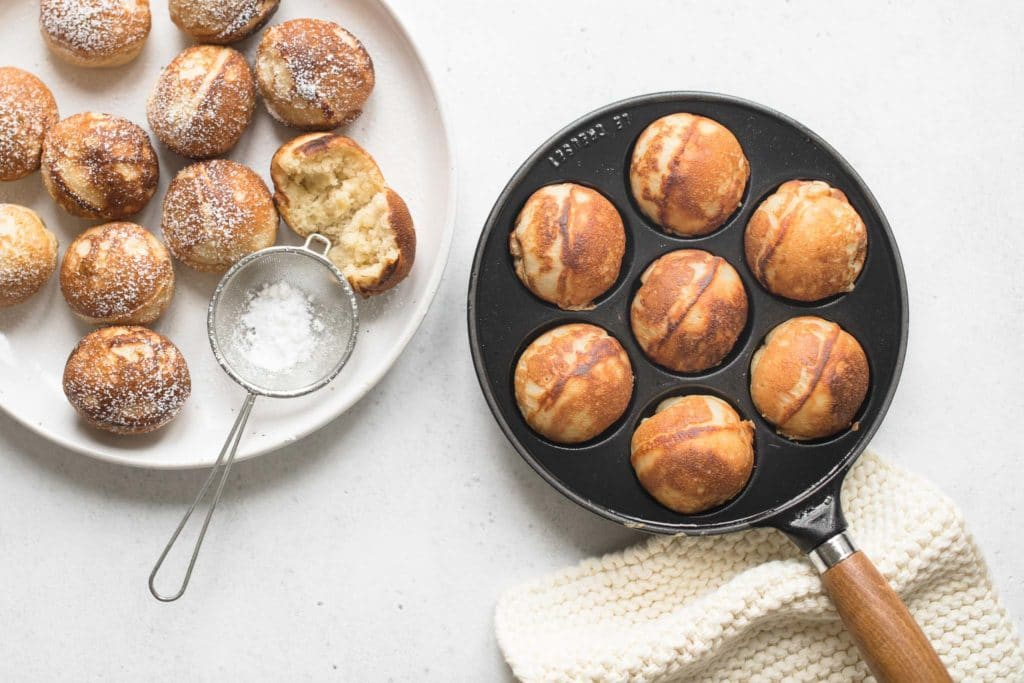
- The Fry: Heat up your to medium heat. Add butter to each hole. Fill them 3/4 full.
- The Turn: Once the edges are firm, use a wooden stick to turn them 90 degrees. Add a tiny bit more batter into the opening, then turn again to “seal” the sphere.
AI Peer Tip: While traditionalists stick to plain batter, the 2026 trend is all about “The Frozen Fill.” Freeze small dollops of hazelnut spread or jam the night before, and drop them into the center of the batter during the first turn for a molten core.
Conclusion
Aebleskiver represents a beautiful intersection of Scandinavian tradition and global adaptation. From the streets of Copenhagen to the “Scandi Festivals” in Oregon, these pancake balls remain a testament to the fact that some recipes are simply too good to change. Whether you’re using a vintage Griswold cast-iron pan or a modern non-stick version, the result is the same: a warm, sugary bite of history.
Also Read : From “Keep Hope Alive” to “Yes We Can”: How Jesse Jackson Paved the Way for Obama