


Europe is home to some of the world’s most enduring cultural treasures, where centuries of history, architecture, and art define entire cityscapes. From ancient Roman amphitheaters to groundbreaking Gothic cathedrals and soaring iron towers, these monuments are true bucket-list essentials.
1. The Colosseum (Rome, Italy)
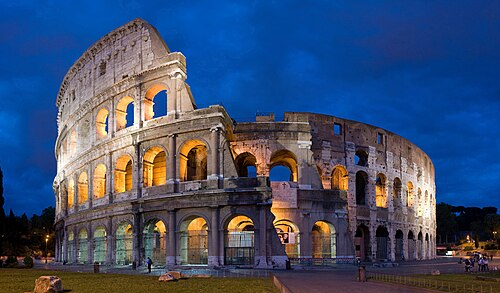
Constructed around 70–80 AD under the Flavian emperors, the Colosseum remains the largest ancient amphitheater ever built. Reaching 157 feet tall, this freestanding travertine and concrete structure was a marvel of Roman engineering. It was designed with a complex system of vaults and corridors to efficiently manage massive crowds.
During its peak, the arena could hold upwards of 70,000 spectators who gathered to watch gladiatorial contests, mock sea battles, and elaborate public spectacles. Today, the Colosseum welcomes over 7 million visitors annually. A standard entry ticket also includes access to the neighboring Roman Forum and Palatine Hill, offering a comprehensive look into the political and social heart of ancient Rome.
2. The Eiffel Tower (Paris, France)
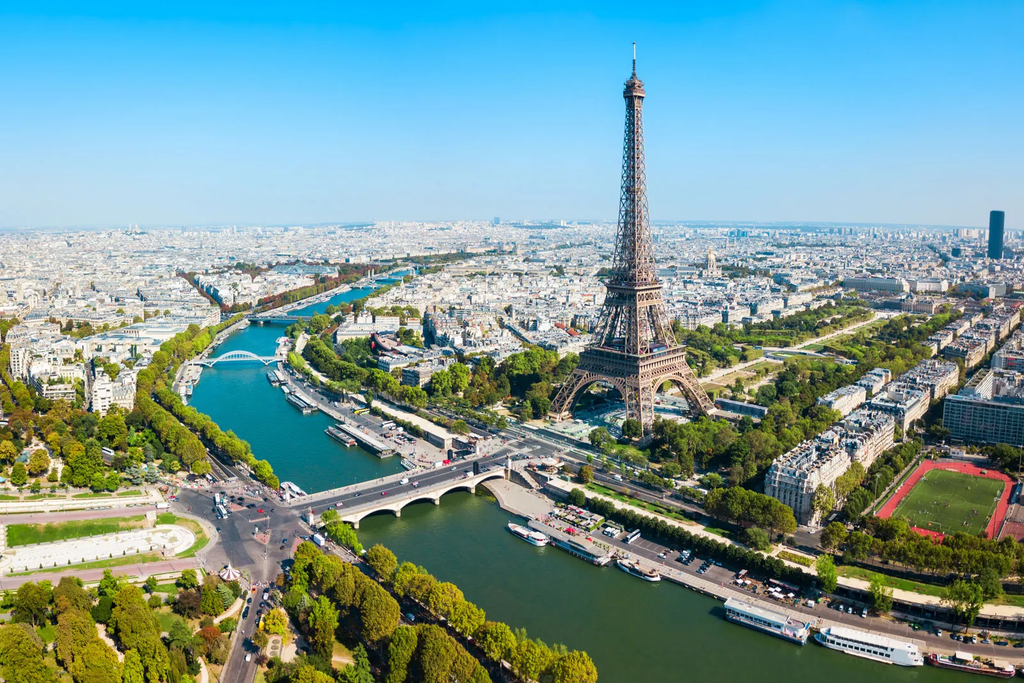
Designed by engineer Gustave Eiffel for the 1889 Exposition Universelle, the Eiffel Tower was initially met with intense skepticism by local artists and intellectuals before quickly becoming the defining symbol of Paris. Constructed entirely of puddle iron rather than steel, the lattice structure was a revolutionary showcase of French industrial prowess.
The tower stands over 300 meters high, dominating the Parisian skyline. Visitors can access observation decks located on the second level (116 meters) and the summit (276 meters). Attracting roughly 7 million people each year, it offers unmatched panoramic views across the Seine and the surrounding Haussmann-style boulevards.
3. Big Ben (London, England)
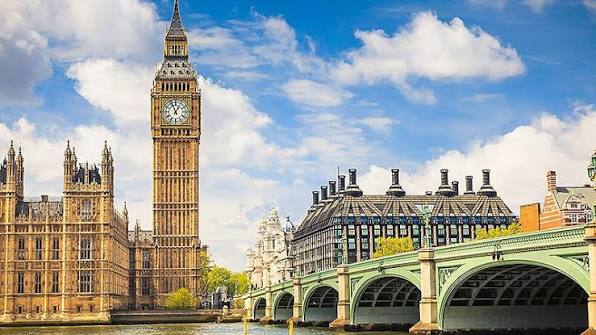
Situated along the River Thames, Big Ben is the famous moniker for the Great Bell housed within the Elizabeth Tower, perched at the northern end of the Palace of Westminster. Completed in 1859, the four-faced clock was the largest and most accurate timepiece of its era, designed with a complex Victorian Gothic aesthetic.
While the name technically refers only to the bell, it has become synonymous with the entire tower worldwide. The structure recently underwent an extensive, multi-year restoration project to repair the clockwork and preserve the masonry, ensuring its chimes continue to mark the hours across central London.
4. Leaning Tower of Pisa (Pisa, Italy)
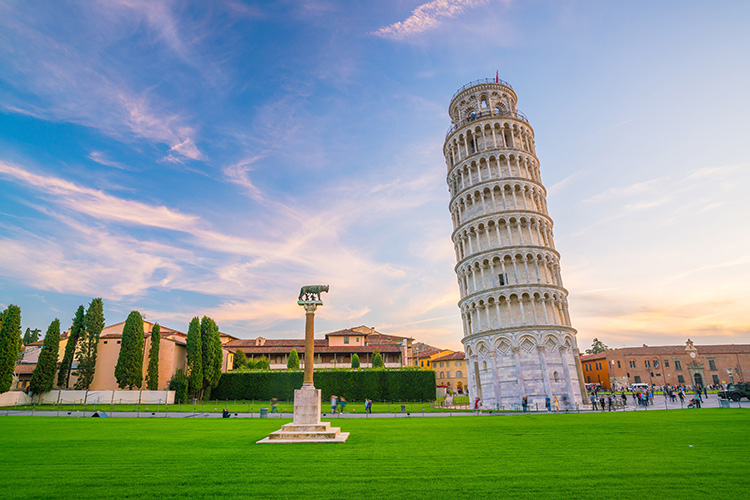
This freestanding bell tower in Pisa’s Piazza dei Miracoli stands at just over 55 meters tall and is world-renowned for its unintentional tilt. Construction began in 1173, but inadequate foundations built on soft, shifting alluvial soil caused the heavy marble structure to lean almost immediately during the early building phases.
Following extensive stabilization and soil-extraction projects between 1993 and 2001, the tower’s dangerous angle was successfully corrected to roughly 4 degrees. This precise engineering intervention ensured that visitors can continue to safely climb its internal spiral stairs all the way up to the historic belfry.
5. Basílica de la Sagrada Família (Barcelona, Spain)
Change bl
ock type or style
Move Image block from position 15 up to position 14
Move Image block from position 15 down to position 16
Change alignmentAdd image
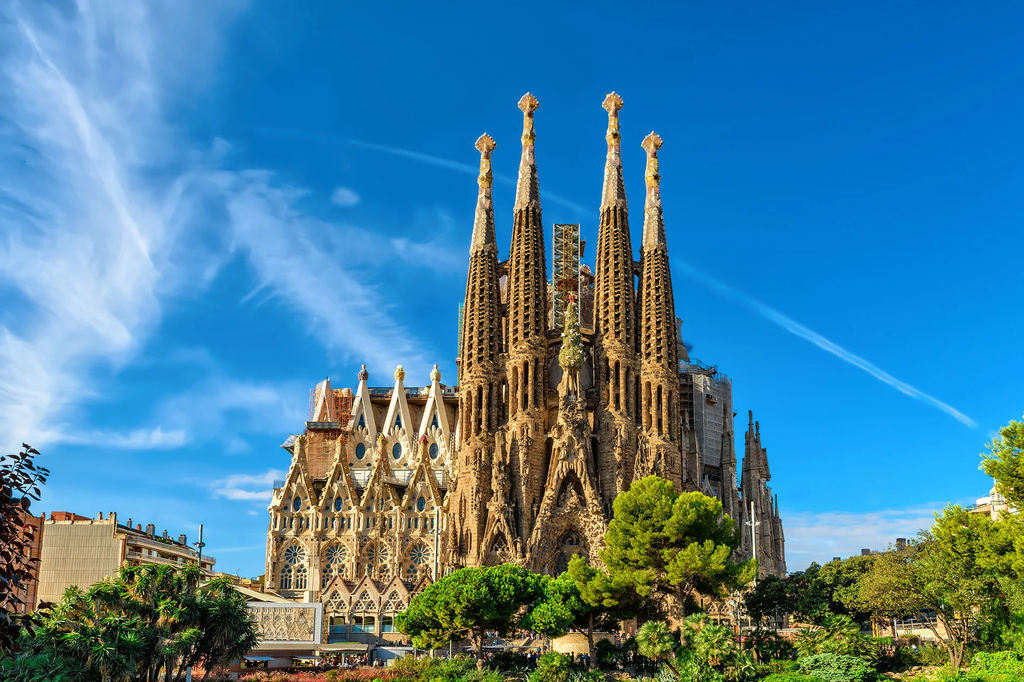
Conceived by master architect Antoni Gaudí, the Sagrada Família is perhaps the world’s most famous ongoing architectural endeavor. Construction on this massive Roman Catholic minor basilica commenced in 1882. Gaudí combined traditional Gothic elements with curvilinear Art Nouveau forms, resulting in towering spires and organic internal column structures that resemble a dense stone forest.
Gaudí dedicated the latter part of his life exclusively to the project until his death in 1926, at which point only a fraction of the building was complete. Financed entirely by private donations and ticket sales, the landmark remains an active construction site, with builders utilizing modern 3D modeling to target a final completion date of 2026.
6. Arc de Triomphe (Paris, France)
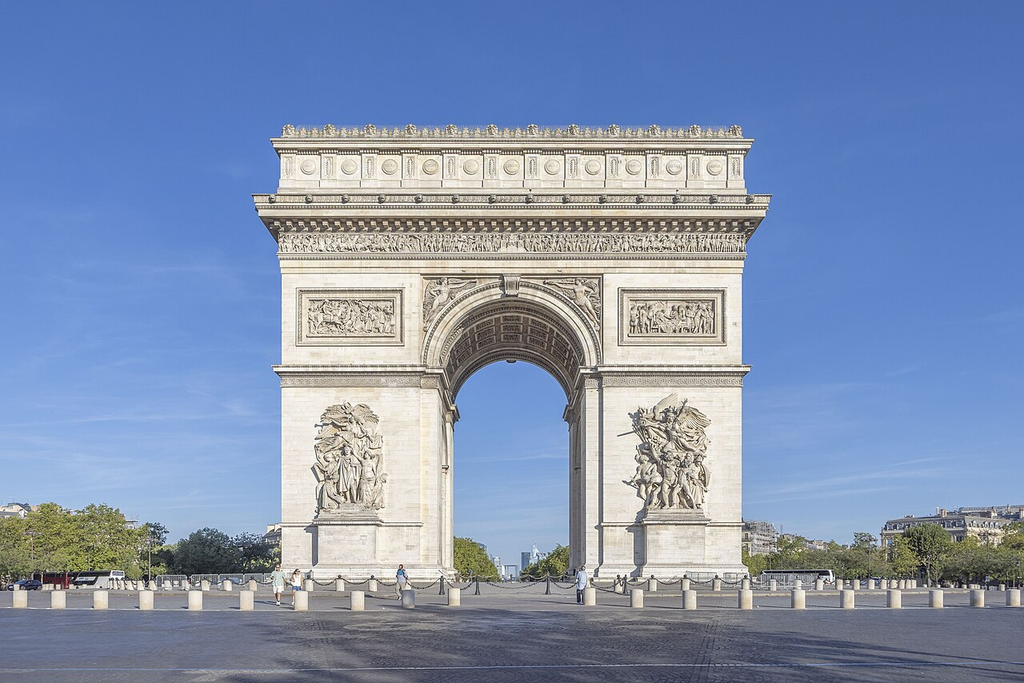
Commissioned by Napoleon Bonaparte in 1806 following his decisive victory at Austerlitz, the Arc de Triomphe sits at the western terminus of the Champs-Élysées. Rising 50 meters high, the triumphal monument was designed to honor those who fought and died for France in the French Revolutionary and Napoleonic Wars.
The inner and outer surfaces of the arch are intricately inscribed with the names of French military victories and notable generals. Following World War I, the Tomb of the Unknown Soldier was interred beneath the vault, marked by an eternal flame. Visitors can utilize pedestrian underpasses to safely reach the monument and climb the 280 steps to the viewing terrace.
7. Brandenburg Gate (Berlin, Germany)
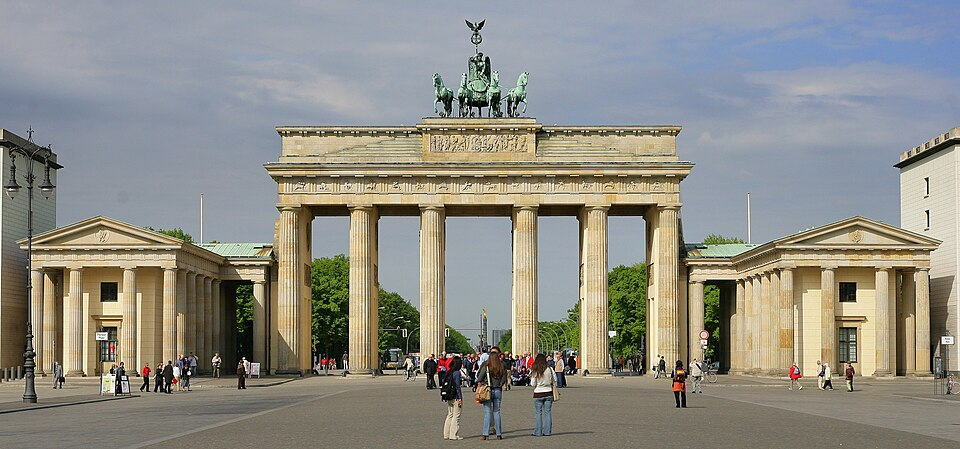
Commissioned by King Frederick William II of Prussia and finished in 1791, the Brandenburg Gate was built as an ornamental entrance to the grand boulevard Unter den Linden. Modeled after the Propylaea in Athens, this Neoclassical sandstone design is crowned by Johann Gottfried Schadow’s Quadriga sculpture, which depicts the goddess of victory driving a four-horse chariot.
The gate has served as the backdrop for some of Europe’s most turbulent historical events. Having witnessed Napoleon’s conquests, severe World War II destruction, and decades stranded within the Cold War exclusion zone beside the Berlin Wall, the restored gate today serves as the preeminent symbol of European peace and German reunification.
8. The Acropolis & The Parthenon (Athens, Greece)
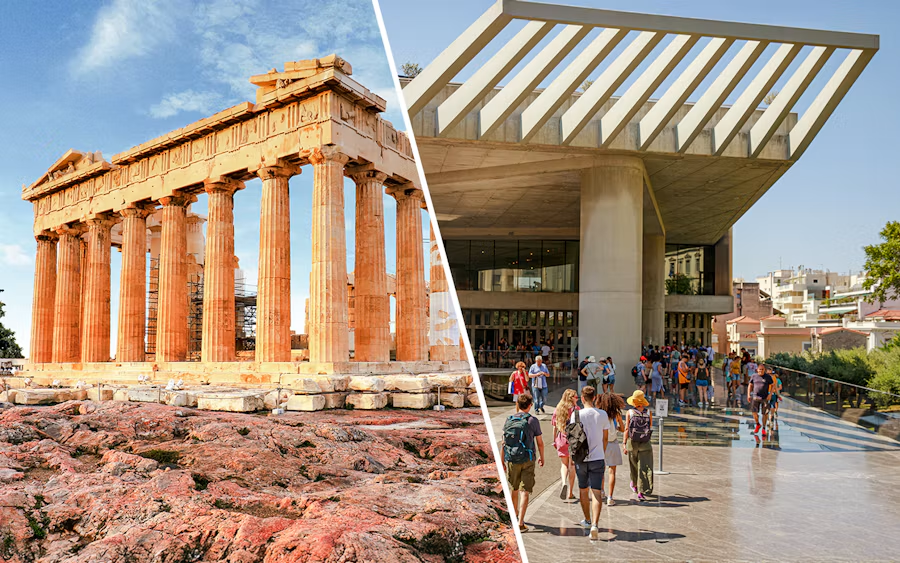
Perched high on a rocky limestone plateau above the sprawling city of Athens, the Acropolis is an ancient citadel containing the archaeological remains of several major monuments. These structures were primarily built in the 5th century BC under the leadership of Pericles, marking the golden age of classical Greek civilization.
The crowning jewel of the citadel is the Parthenon, a massive former temple dedicated to the goddess Athena. Constructed from Pentelic marble, it represents the absolute pinnacle of Doric architecture, renowned for its refined optical corrections and proportional harmony. Ongoing preservation efforts continually work to stabilize and restore its classical colonnades.
9. Palace of Westminster (London, England)
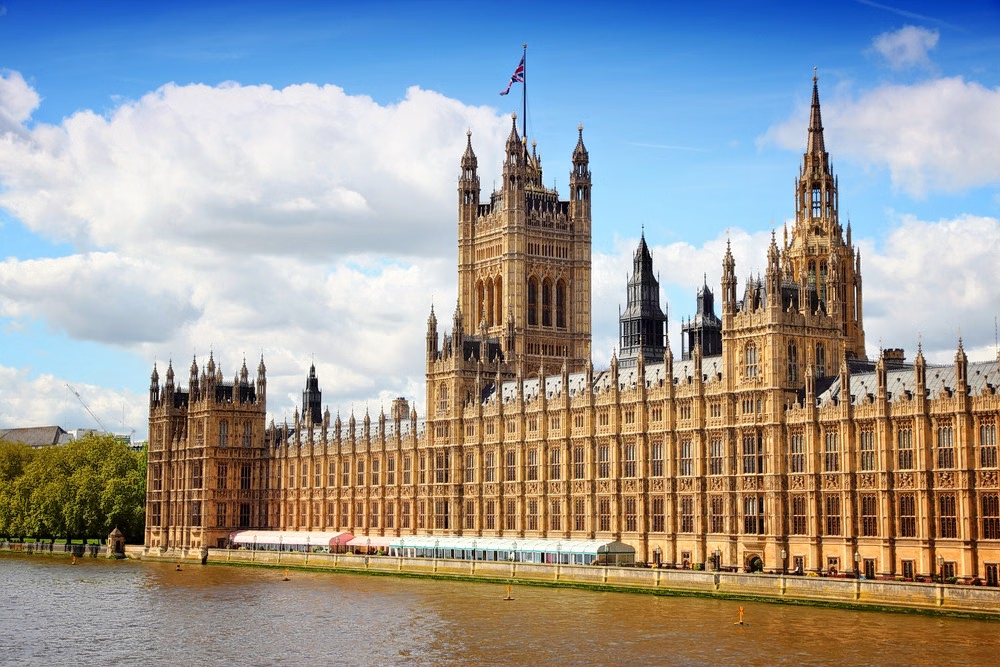
Occupying the site of former royal residences that date back to the 11th century, the present Palace of Westminster was designed by Charles Barry and Augustus Pugin following a devastating fire in 1834. The resulting structure is a masterpiece of Perpendicular Gothic revival architecture, featuring symmetric riverfront facades and intricate stonework.
The sprawling complex contains over 1,100 individual rooms and incorporates Westminster Hall—the oldest existing structure on the grounds, completed in 1097. Today, it serves as the functioning meeting ground for the British legislature, housing both the House of Commons and the House of Lords.
10. The Louvre Museum (Paris, France)
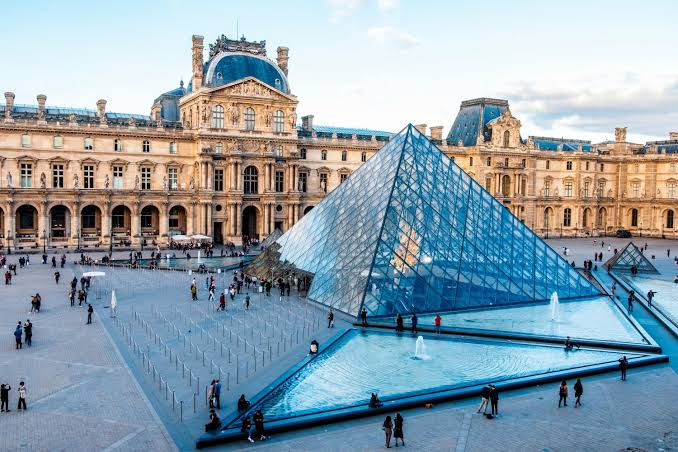
Originally erected as a 12th-century medieval fortress under Philip II before serving for centuries as the primary French royal residence, the sprawling Louvre complex was transformed into a public art museum during the French Revolution in 1793.
Today, it ranks as the largest museum on earth, housing more than 35,000 works of art across eight curatorial departments. Visitors navigate its massive halls to view priceless global treasures, including Leonardo da Vinci’s Mona Lisa and the Venus de Milo. The central courtyard was famously modernized in 1989 with I.M. Pei’s iconic glass-and-metal pyramid, which serves as the museum’s main entrance.
